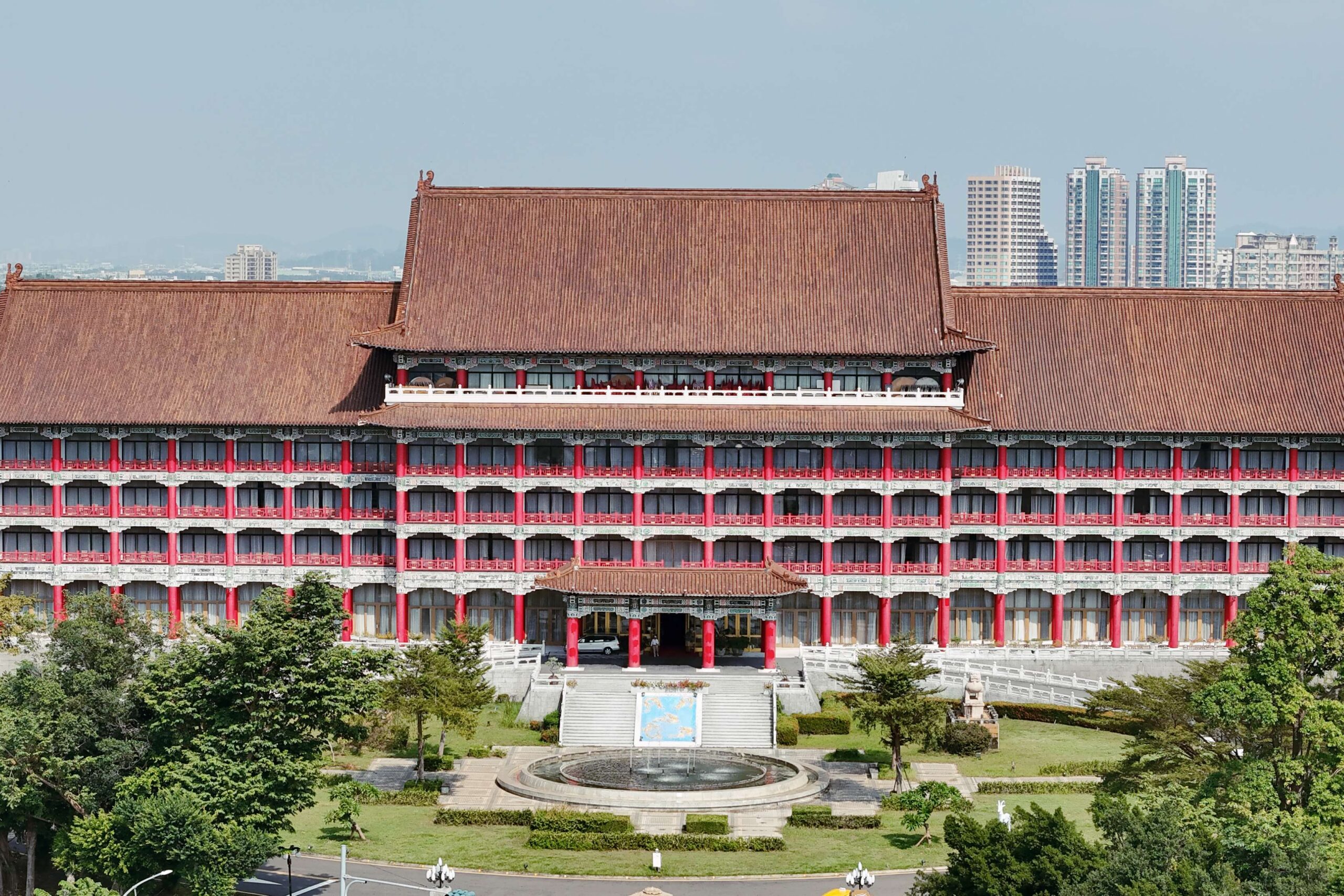
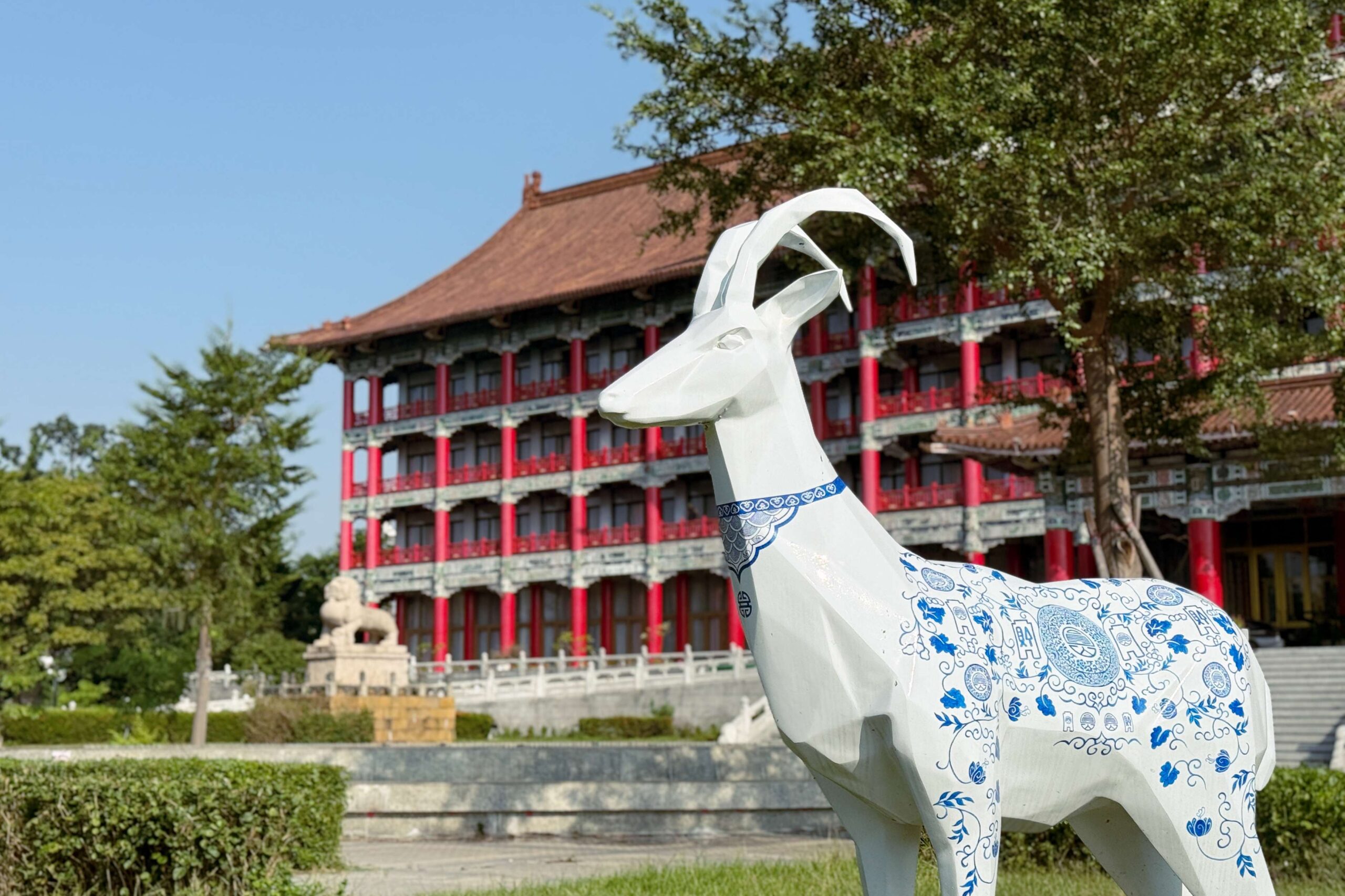
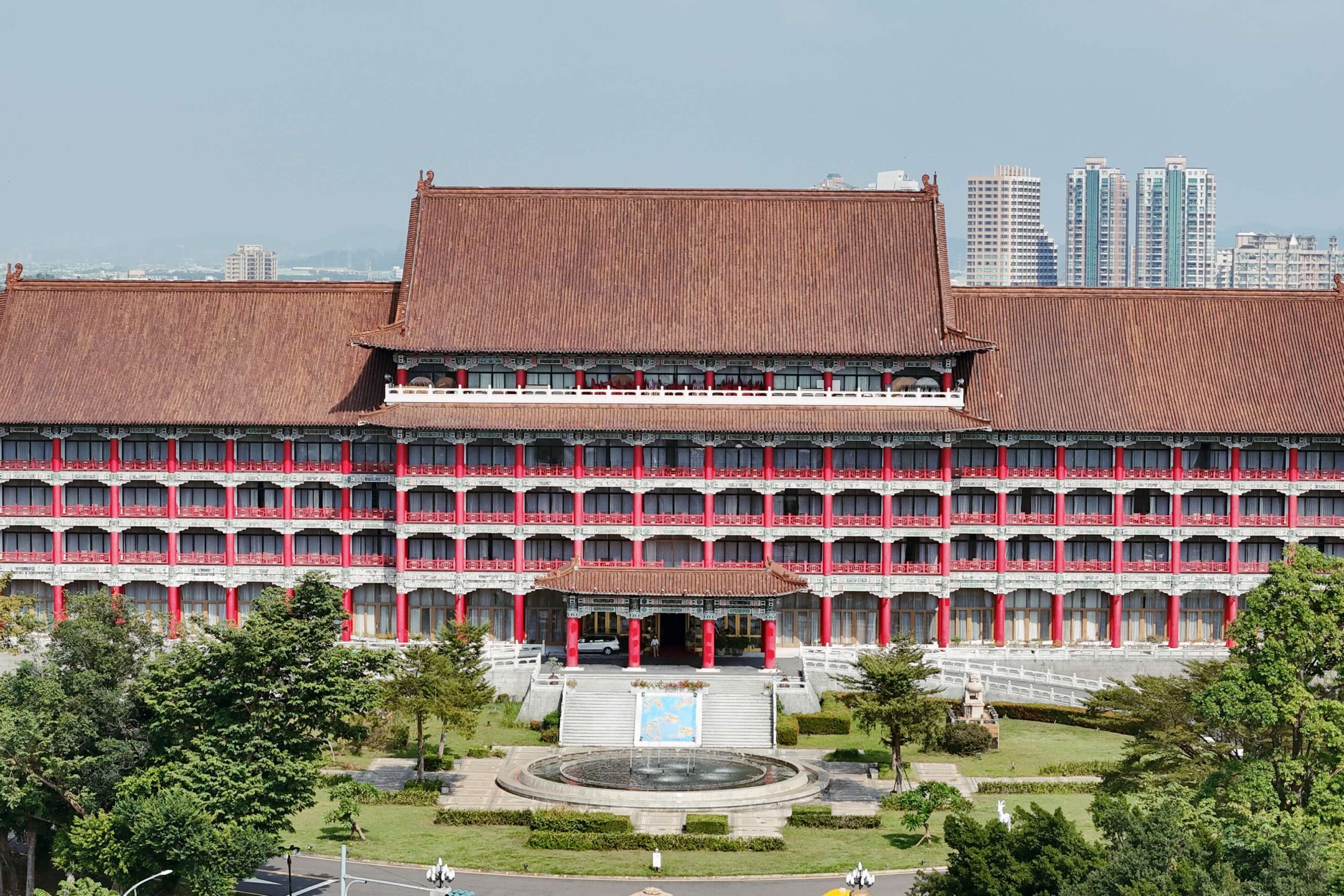
Earlier this year, some friends came to visit Kaohsiung and stayed at the Grand Hotel. Thanks to them, I learned that the hotel offers guided tours. That was how I finally had the chance to step inside this renowned cultural landmark and lift a corner of the veil of mystery surrounding the Kaohsiung Grand Hotel.
Contents
◦ Kaohsiung Travel Guide
01|Transportation in Kaohsiung
🚄 Taiwan High Speed Rail
🚄 Kaohsiung Metro (MRT) Unlimited Travel Pass
🛵 Kaohsiung Scooter Rental - Zuoying High Speed Rail Station Pickup
🛵 Kaohsiung Scooter Rental|Kaohsiung Railway Station Pickup
02|Popular Attractions in Kaohsiung
🎫 Kaohsiung Fun Pass
🎫 E-DA Theme Park Ticket
🎫 Suzuka Circuit Park Ticket in Kaohsiung
🎫 Shoushan Zoo Tickets
🎫 Hamasen Museum of Taiwan Railway Ticket in Kaohsiung
🎫 British Consulate in Kaohsiung: Tickets and Discount Packages
🎫 National Science And Technology Museum Ticket in Kaohsiung
03|Things To Do in Kaohsiung
🚢 Kaohsiung Love River Love Boat Ticket & Cruise Guide
🚣🏻 Water skiing experience at Lotus Lake Water Skiing Theme Park
♨️ Zheng Qing Song Korean Sauna in Kaohsiung
◦ The History of The Grand Hotel Kaohsiung
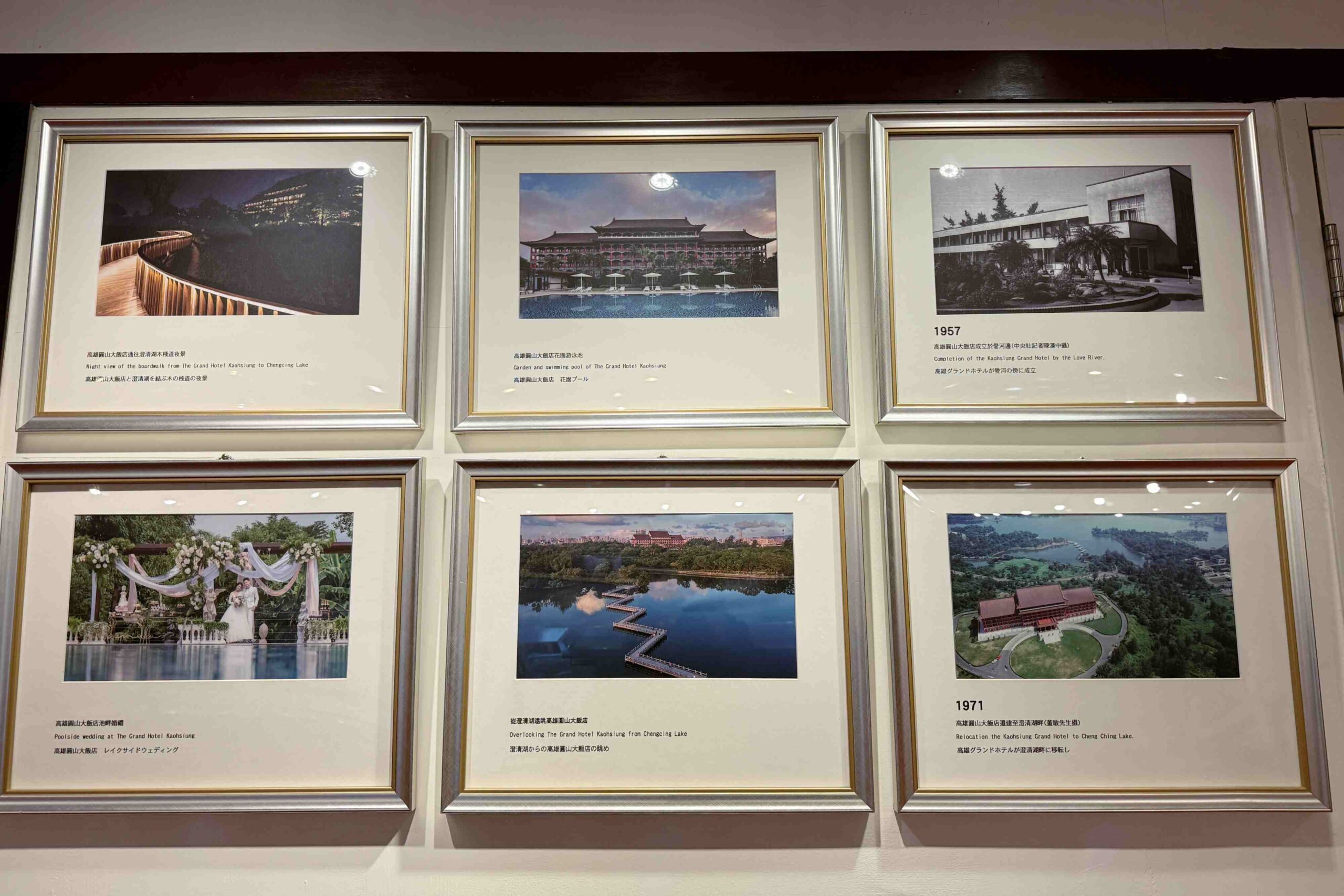
In the past, the Grand Hotel was regarded as Taiwan’s national showcase and an important venue that witnessed the country’s political and economic development. The Kaohsiung Grand Hotel was entrusted with the same role. Its history can be traced back to 1957, when the hotel was first established along the Love River. At the time, it was one of the few luxury hotels in Taiwan, tasked with hosting international heads of state and prominent figures from politics and business. Notable guests included film star Alain Delon, Generalissimo Chang Hsueh-liang, and several leaders of Taiwan’s diplomatic allies.
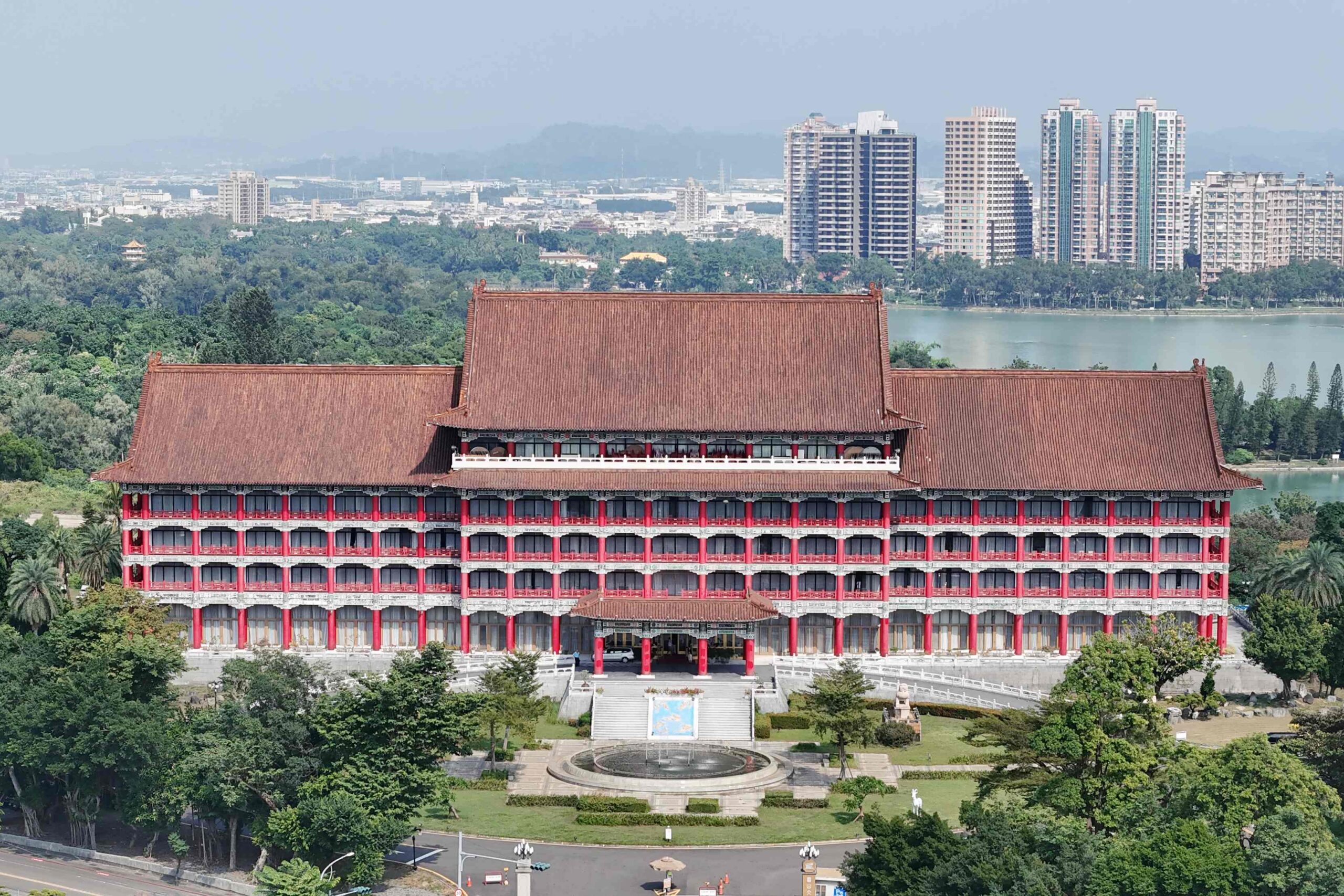
In 1971, the hotel relocated to its current site by Chengcing Lake and reemerged in a grand Chinese palace–style architectural design, becoming a major landmark of Kaohsiung. More than just a hotel, it has borne witness to changing times and preserved countless fragments of history.
◦ Tour Overview
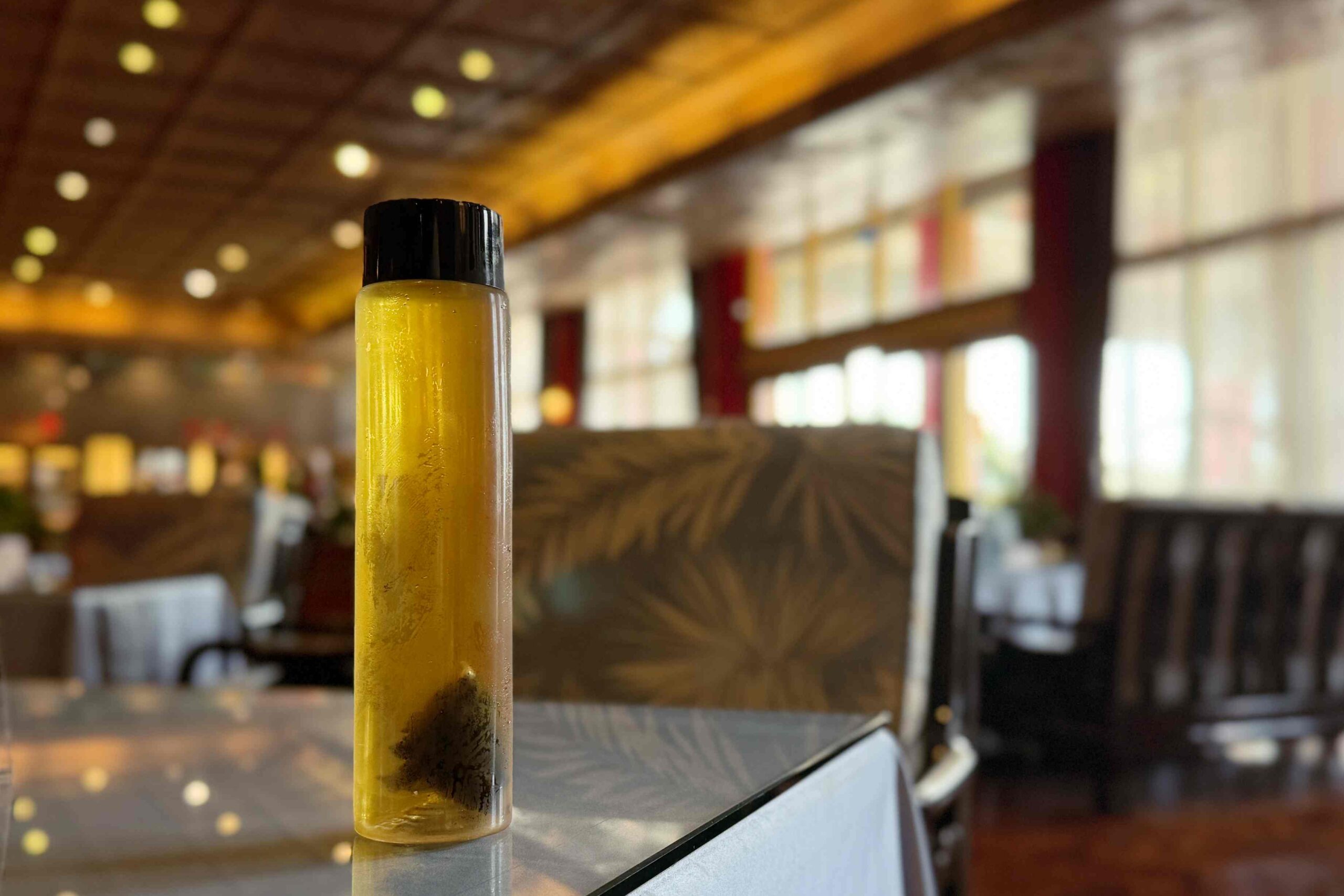
The Grand Hotel Kaohsiung offers two guided tours daily, at 9:30 a.m. and 3:00 p.m. The fee is NT$250 per adult and NT$150 per child. After the tour, each adult participant receives a complimentary bottle of cold-brewed tea.
◦ Tour Route
The tour itinerary is as follows: Imperial Path → Ornately carved main lobby → Yushan Sand Painting → “Currency Wall” → Footprints of Grand Hotel History on the second floor → Dragon and Phoenix Hall observation deck on the fifth floor → The vanished secret room → Tudi Gong (Earth God) shrine → Garden swimming pool → Grand Hotel Cultural and Creative Area (returning to the first-floor lobby)
The entire tour lasts approximately one and a half hours.
◦ Tour Highlights
01|Imperial Path
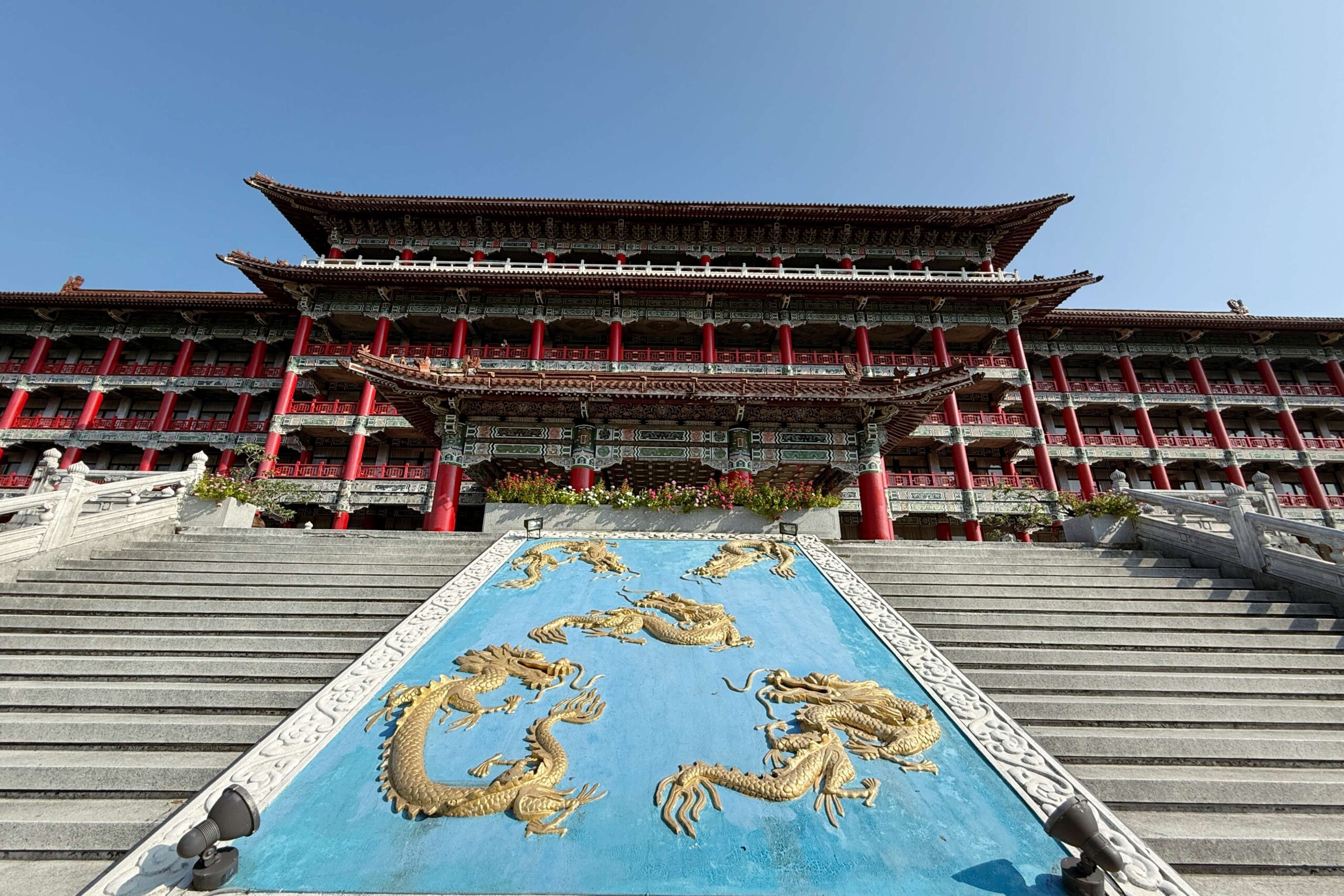
After breakfast and completing check-in at the front desk, the manager led our group outside and began the introduction from the hotel’s exterior. The path leading from the reflecting pool to the main lobby is known as the “Imperial Path.” Its most striking feature is the golden dragon adorning the staircase. In ancient times, dragons with five claws were reserved exclusively for emperors, while four-clawed dragons were considered lesser. The five-clawed golden dragon here therefore symbolizes the supreme status of the hotel’s honored guests. An amusing detail is that the dragon in front of the lobby has never been “given its eyes”—a traditional finishing touch in dragon paintings. The reason, we were told, is that they feared it might fly away, a story that drew knowing smiles from everyone in the group.
02|Ornately Carved Main Lobby
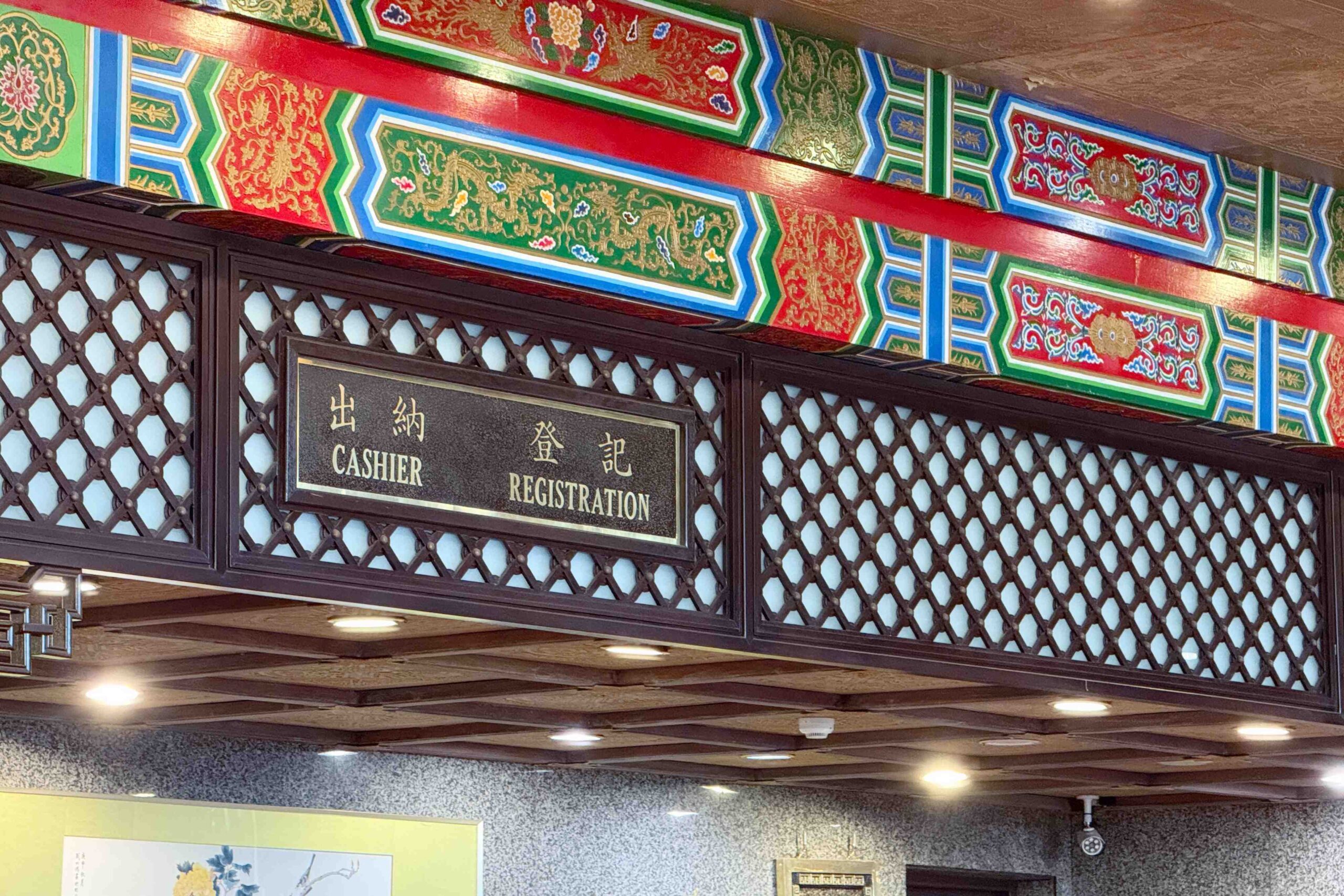
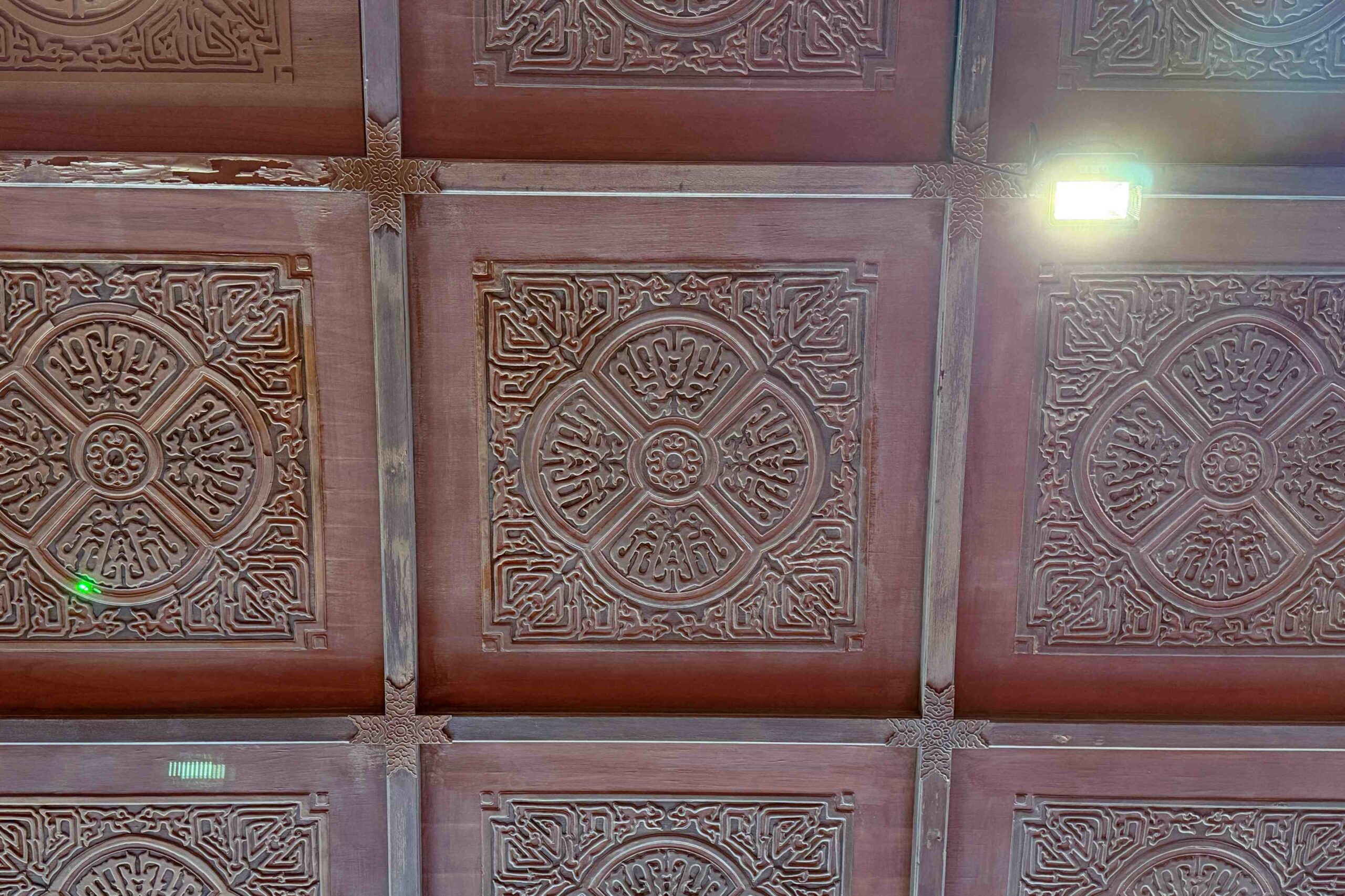
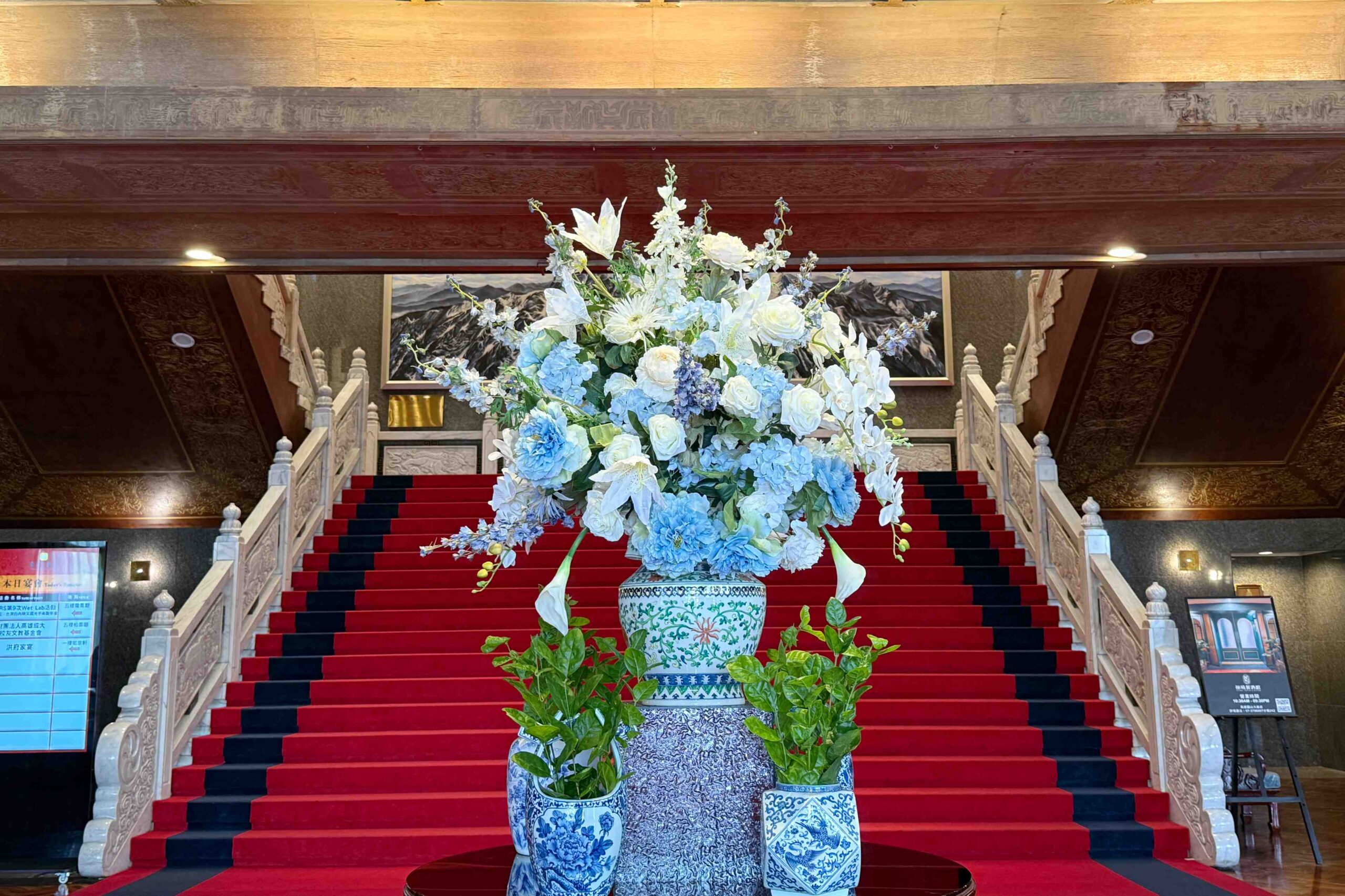
Walking along the Imperial Path into the lobby, we were greeted by an array of auspicious ruyi motifs, as the manager pointed out key details along the way. The patterns on the cashier counter are formed by interlinked copper coins, symbolizing abundant wealth. Looking up at the ceiling, the design is composed of four dragon heads, conveying wishes for harmony and smooth success in all directions.
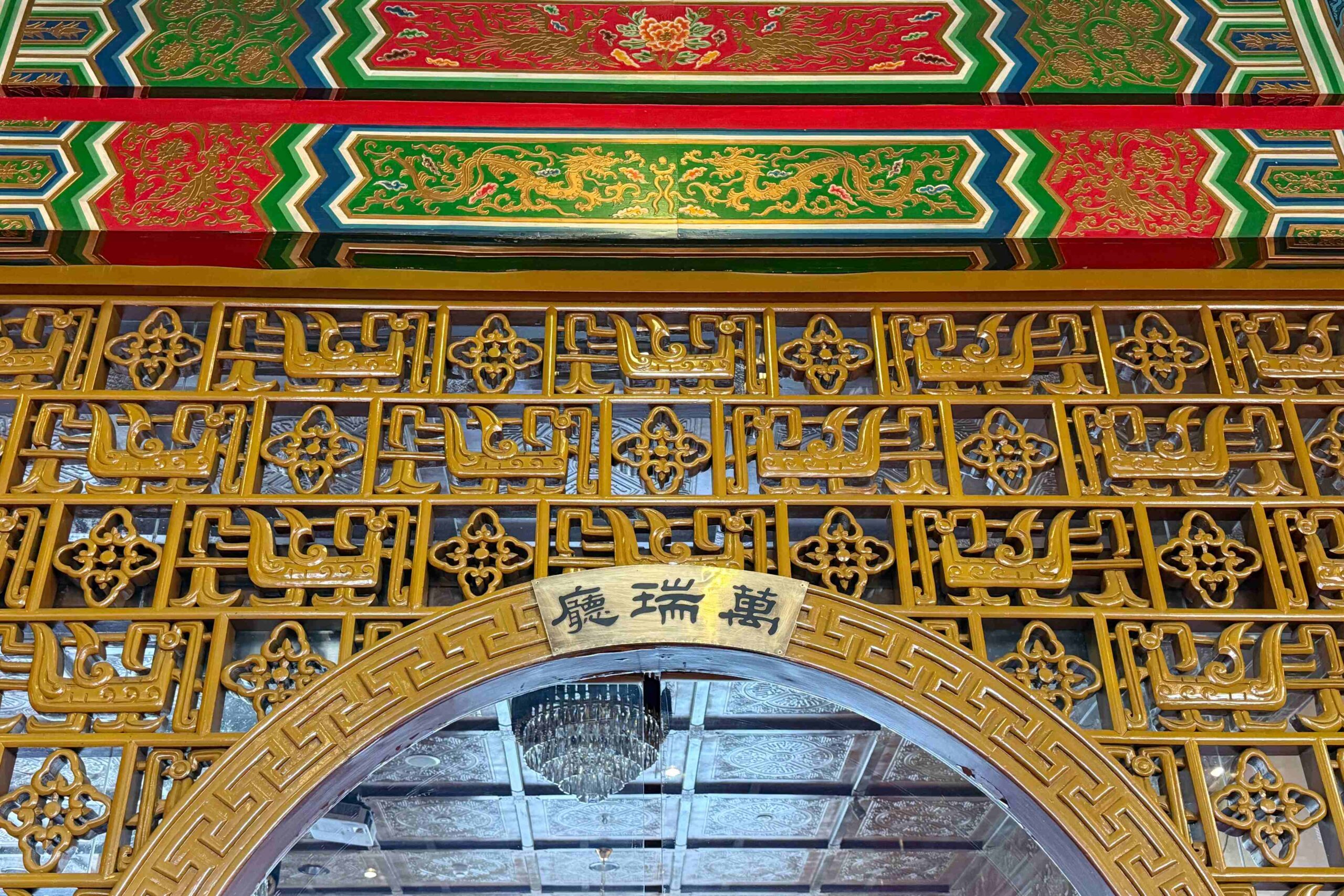
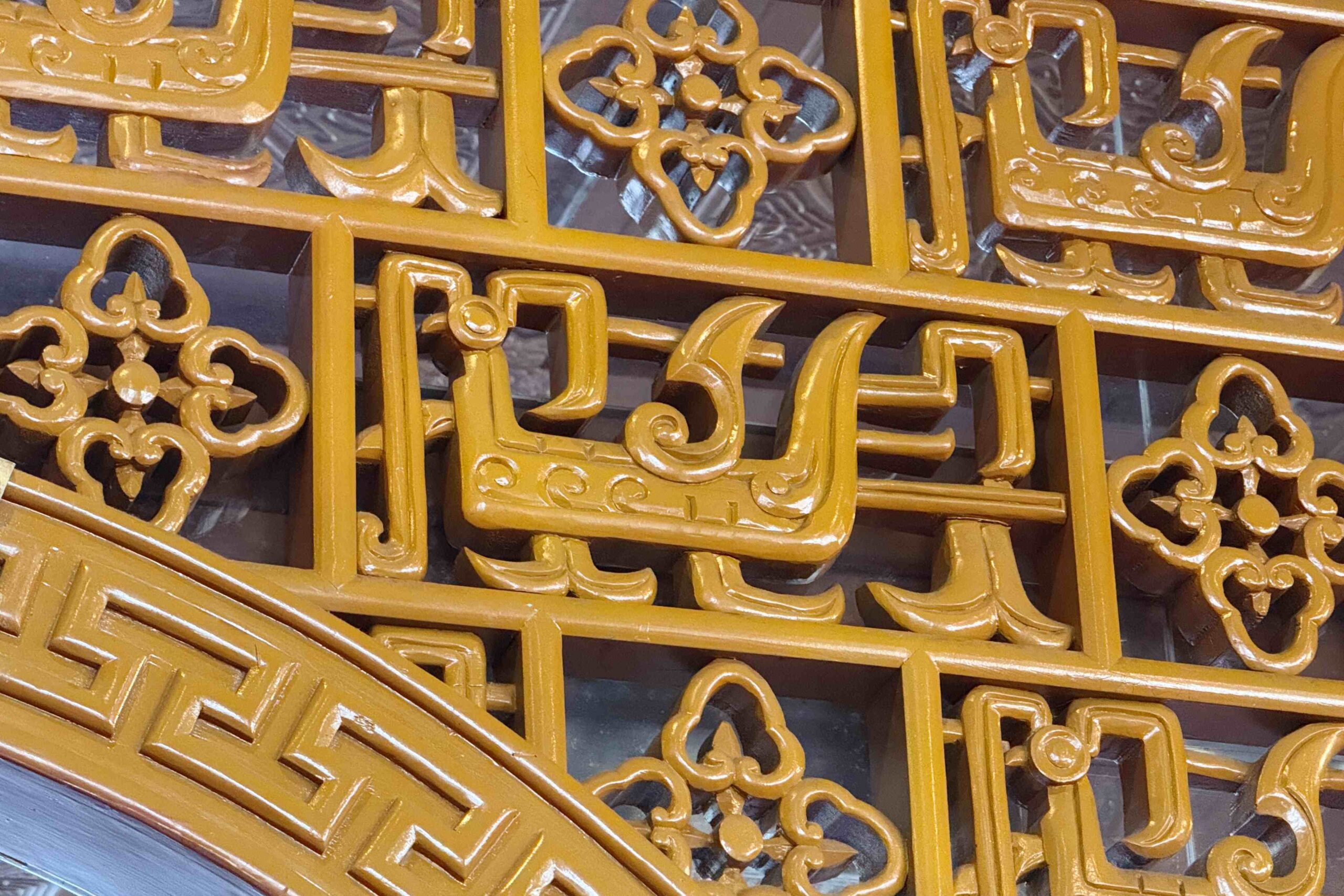
Beyond ruyi patterns, the Grand Hotel also makes extensive use of the chiwen motif. A chiwen is a mythical creature with a dragon’s head and a fish’s body, believed to spit water to ward off fire, and thus associated with protection and the repelling of evil spirits. Numerous chiwen carvings can be seen in the Wanrui Hall, imbuing the entire space with auspicious symbolism.
03|Yushan Sand Painting
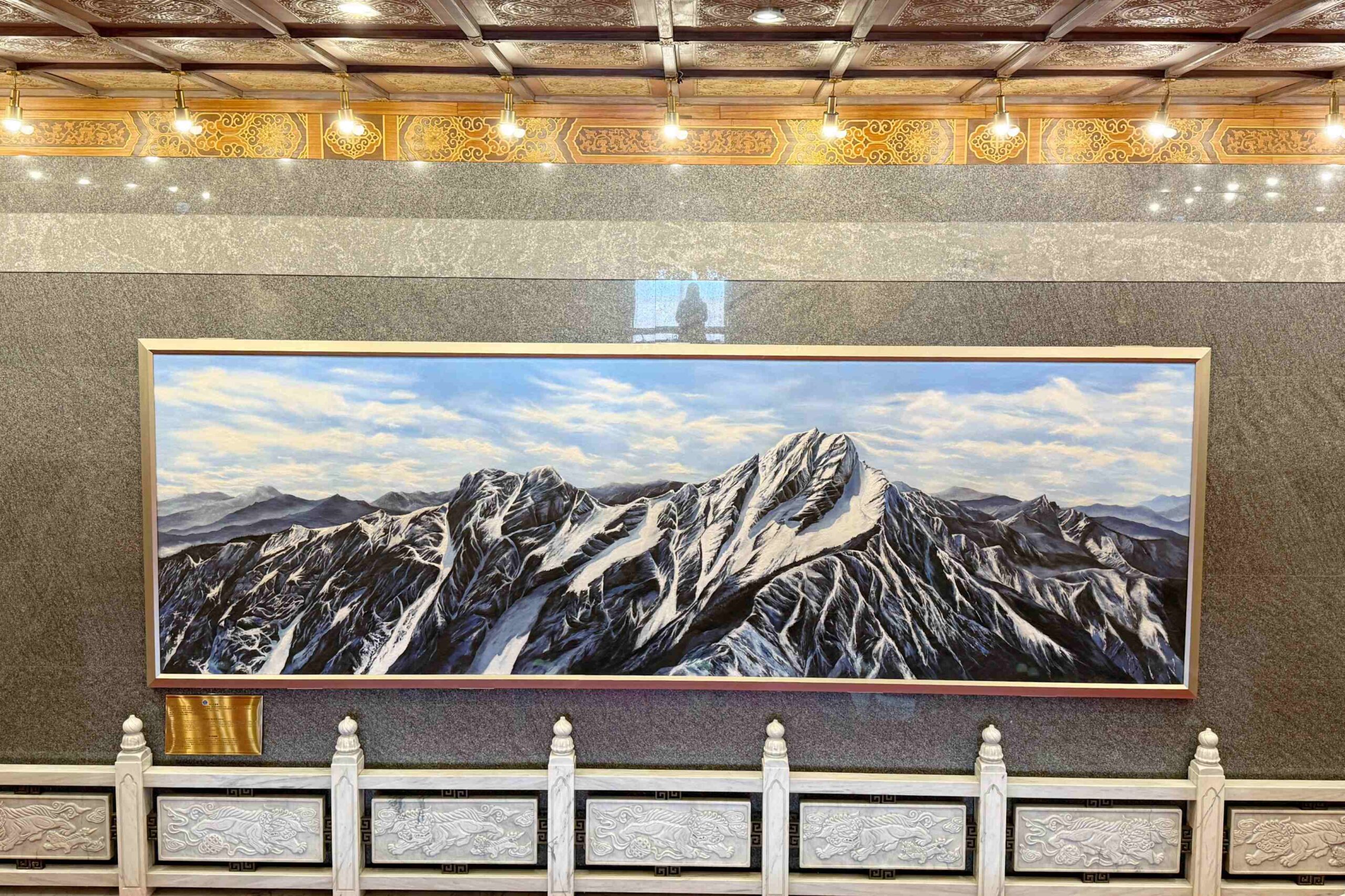
The most eye-catching feature in the entire lobby is undoubtedly the Yushan Sand Painting on the staircase. This monumental artwork was created under the guidance of instructors from the Taipei Prison Sand Art Program, together with inmates, and took more than three months to complete. Long committed to public welfare, the Grand Hotel chose to support and encourage positive transformation through this project. The hope is that one day, all the inmates who participated in the creation will return with their families and friends, witnessing firsthand their own journey of change and renewal. This spirit echoes the imagery of Yushan in winter: as the ice and snow begin to melt, spring is just around the corner.
04|Currency Wall
During the late Western Han dynasty, “huobu” (currency cloth) was one of the forms of circulating currency, and its association with wealth has endured through the ages. In the past, the Grand Hotel used huobu-shaped tokens as room key tags, symbolizing prosperity and good fortune. However, their elegant design often led guests to “accidentally” take them home, a story that made us burst out laughing.
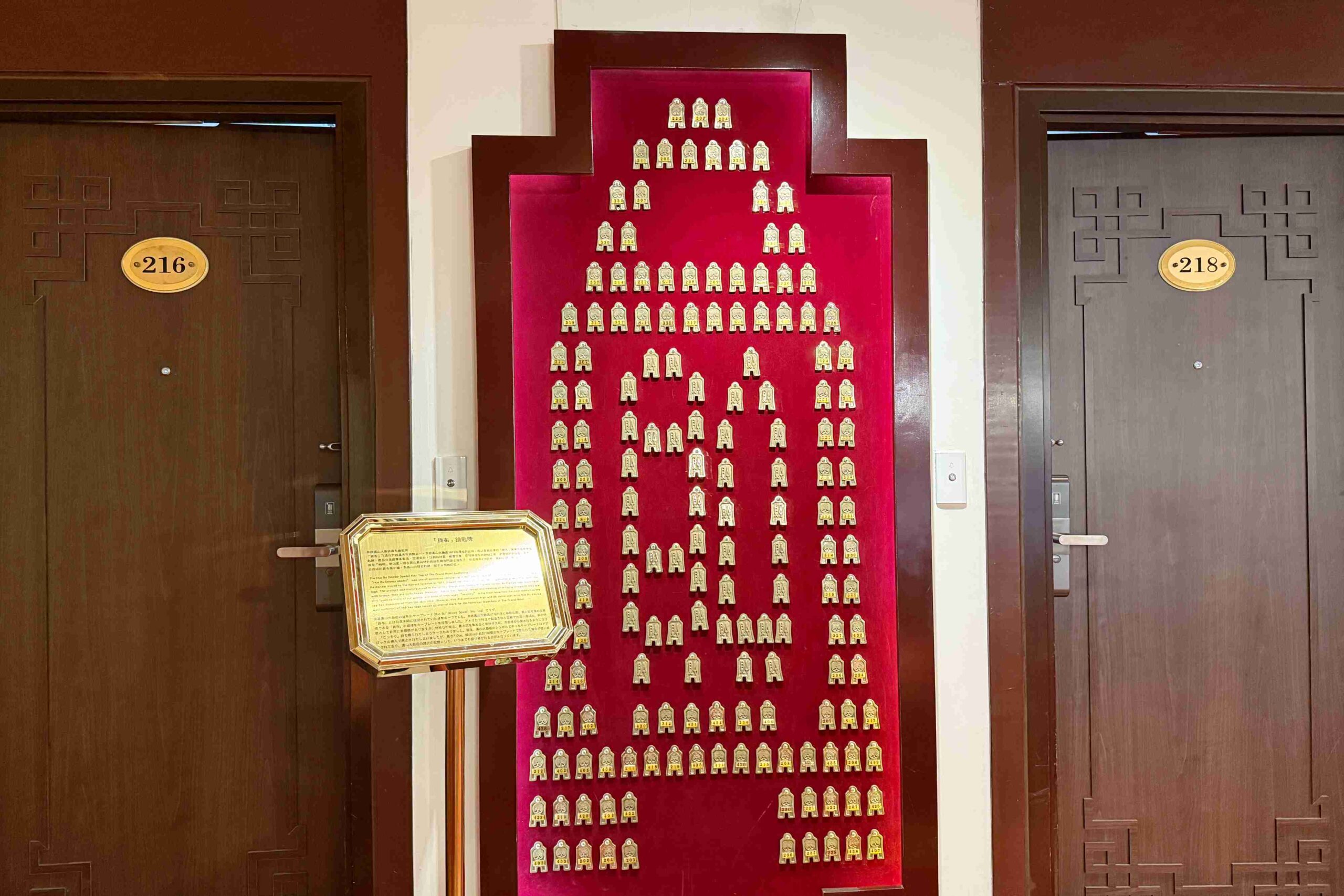
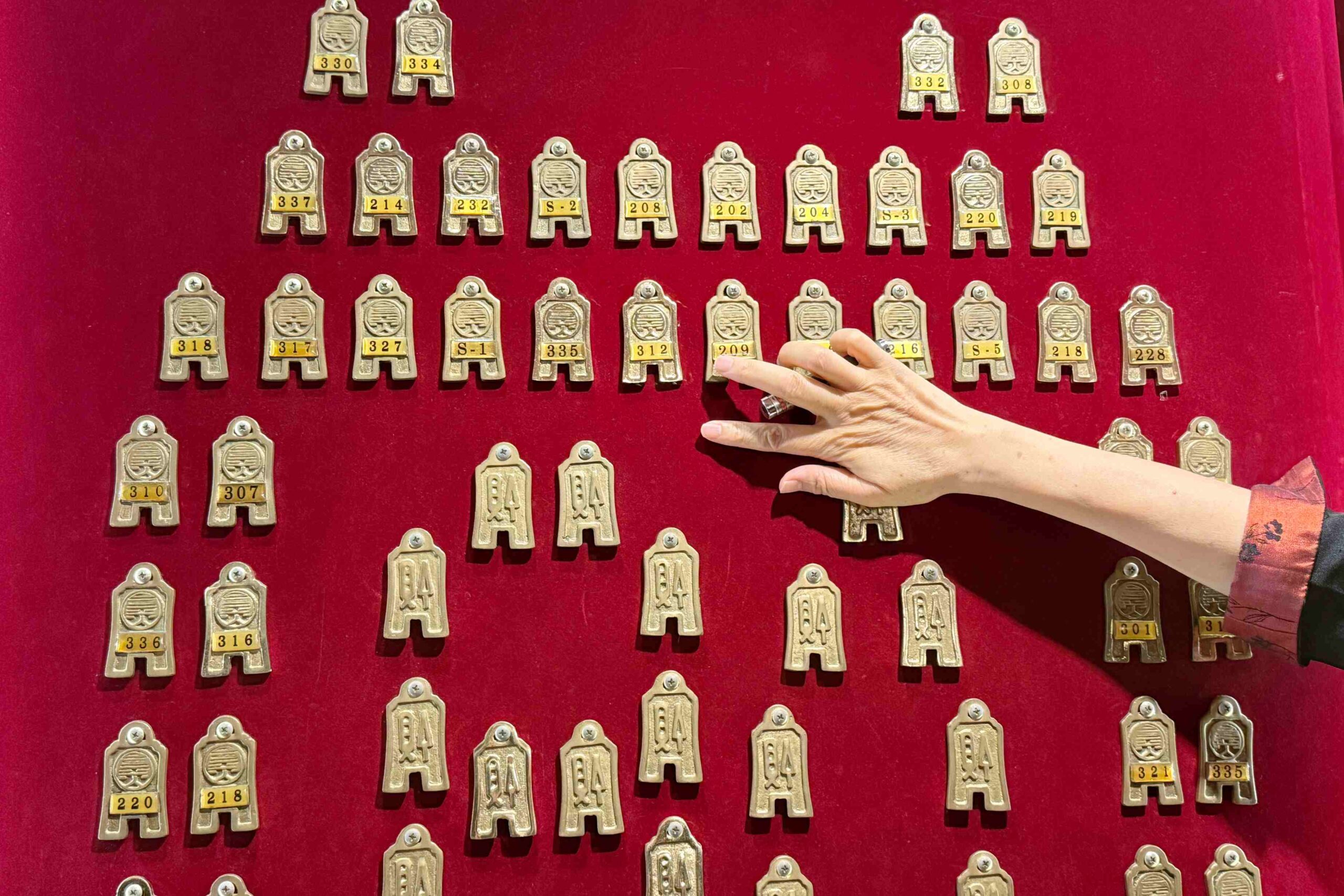
With renovations and modernization, these huobu key tags were officially retired. Today, the hotel has cleverly repurposed them into the distinctive “Currency Cloth Wall,” preserving their historical meaning while creating a popular photo spot.
05|Footprints of Grand Hotel History
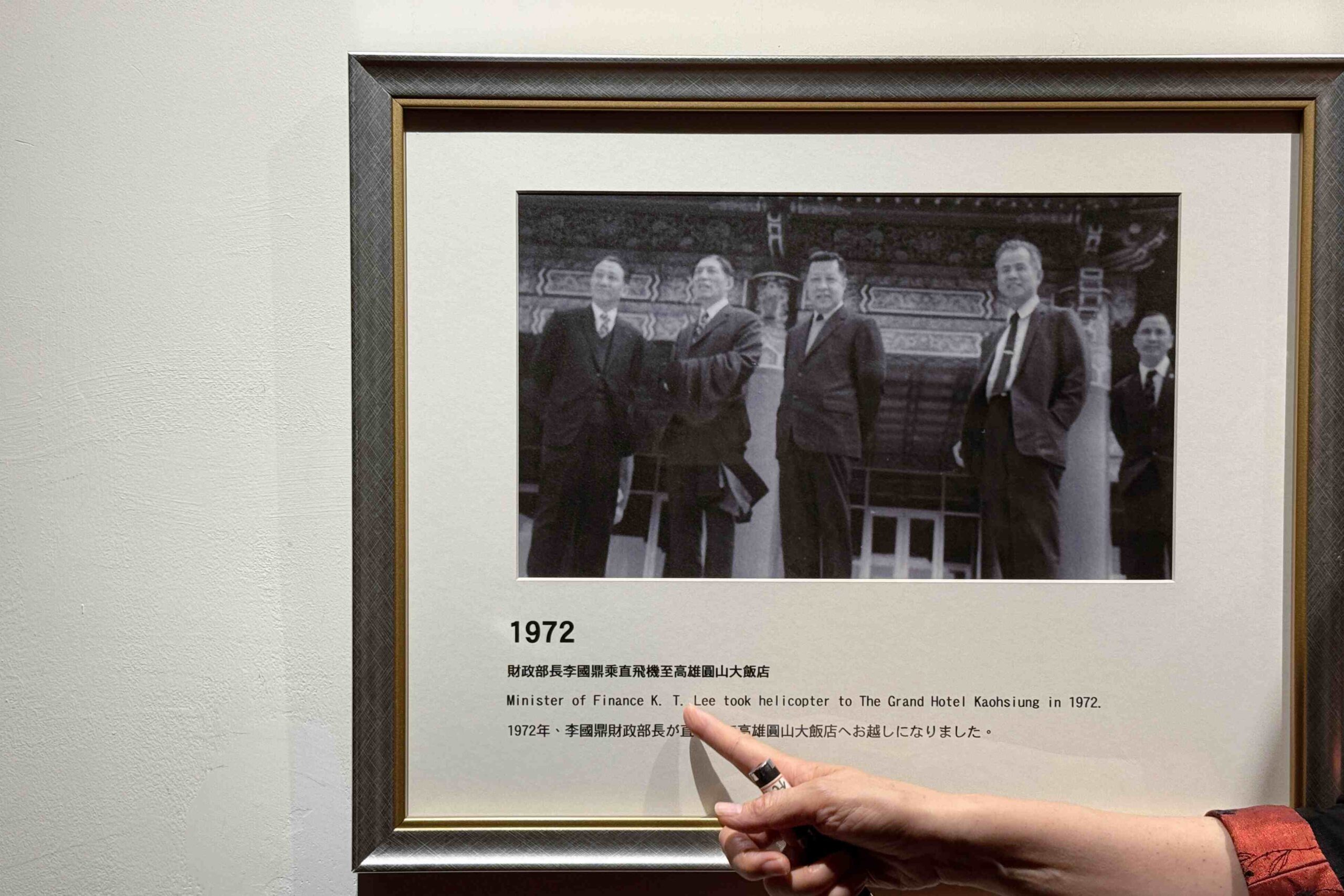
Along the corridor leading from the Currency Wall to the hidden bistro, a series of historical photographs of the Kaohsiung Grand Hotel are on display, making the walk feel like a journey through a time tunnel. Here, one can see images of film star Alain Delon, who visited Kaohsiung in 1981 for the Golden Horse Awards, as well as Li Kuo-ting, a former Minister of Finance. Who was Li Kuo-ting? He was the visionary figure who recognized Morris Chang’s potential and played a crucial role in persuading him to return to Taiwan. Without Li’s foresight and decisive action, there would be no TSMC today—the “sacred mountain” that Taiwan proudly relies on.
06|Dragon and Phoenix Hall Observation Deck
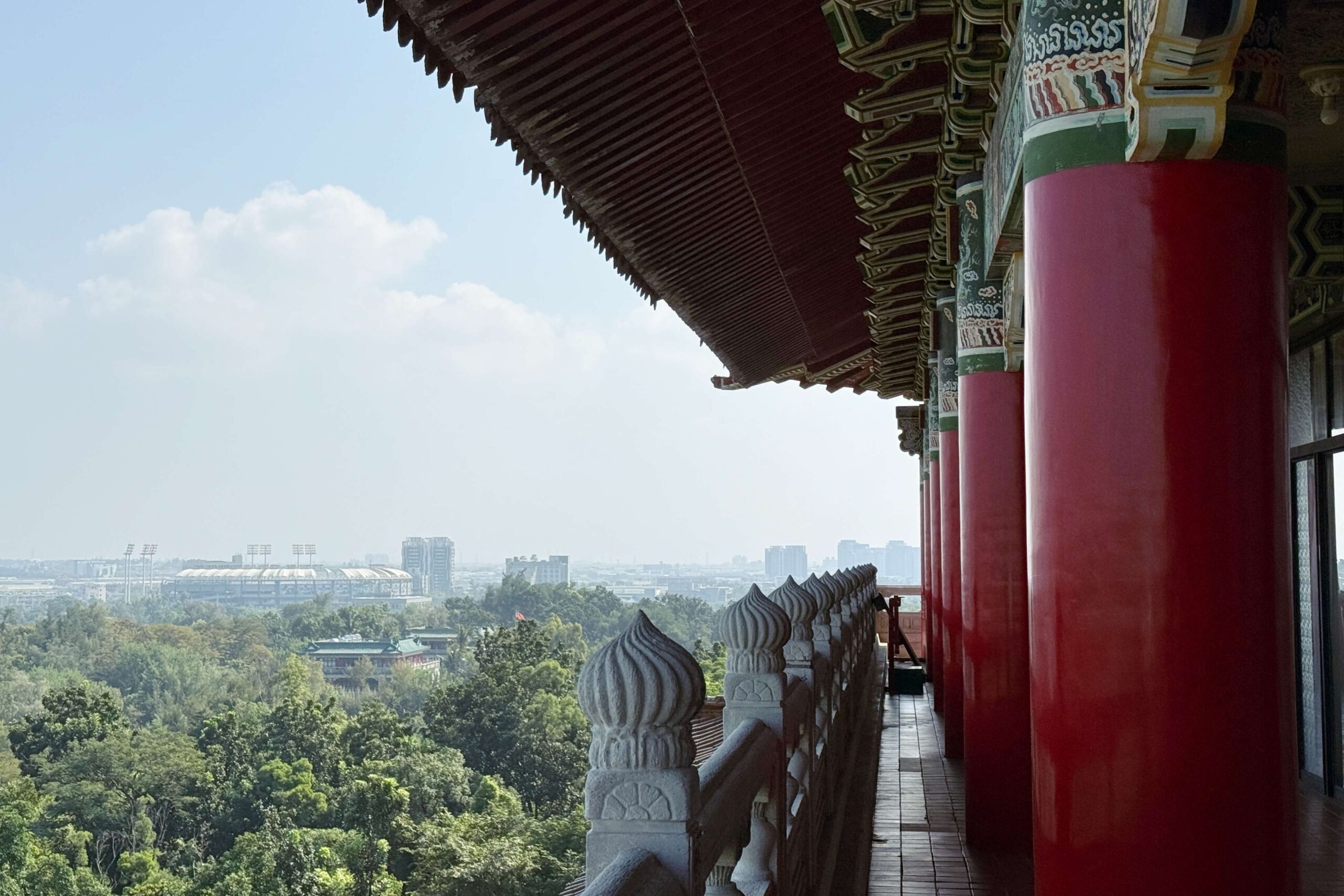
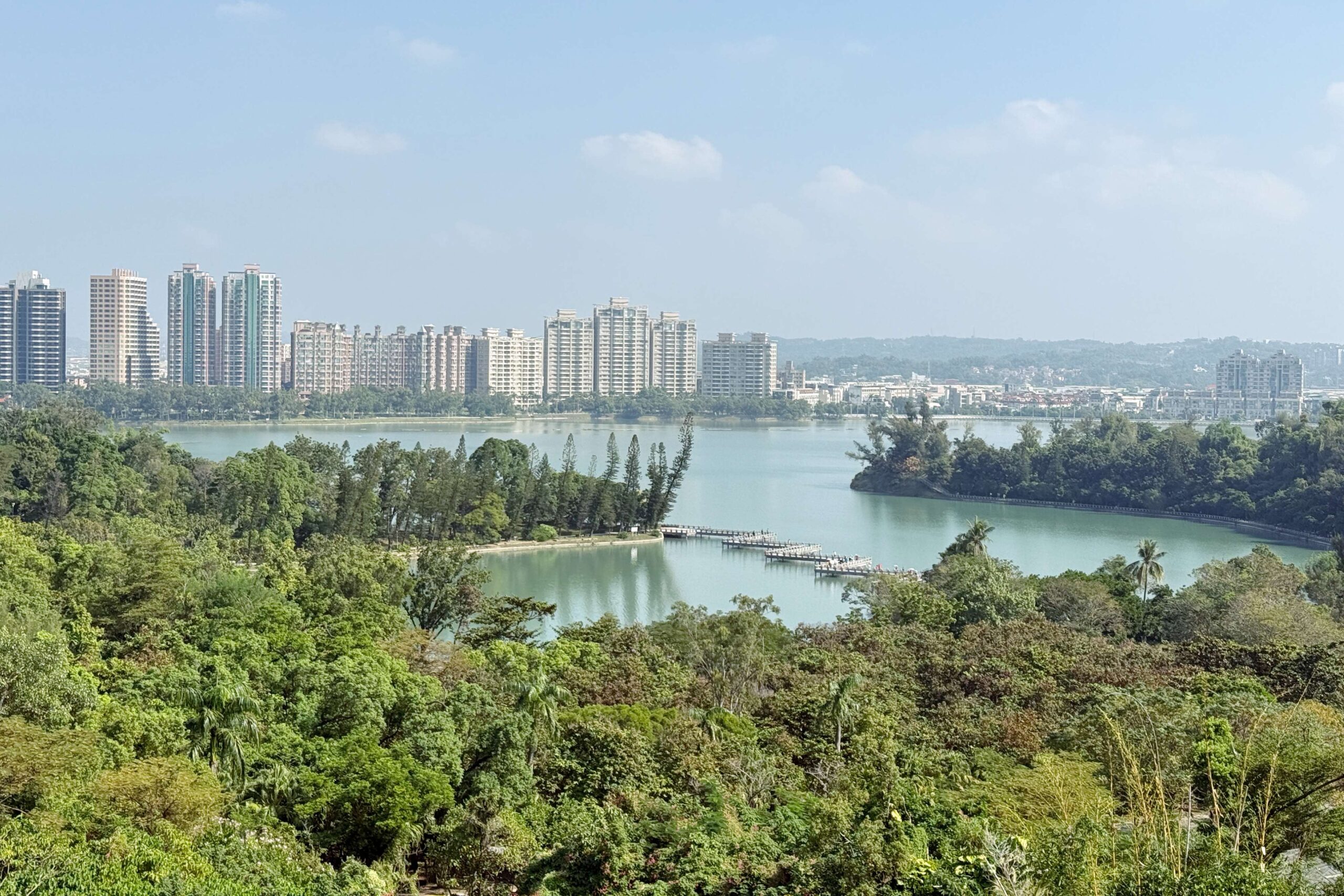
Next, we made our way to the Dragon and Phoenix Hall on the fifth floor. The view here is truly spectacular—Chengcing Lake and the Nine-Bend Bridge spread out before us in full view. The scenery alone made the entire tour feel well worth the price.
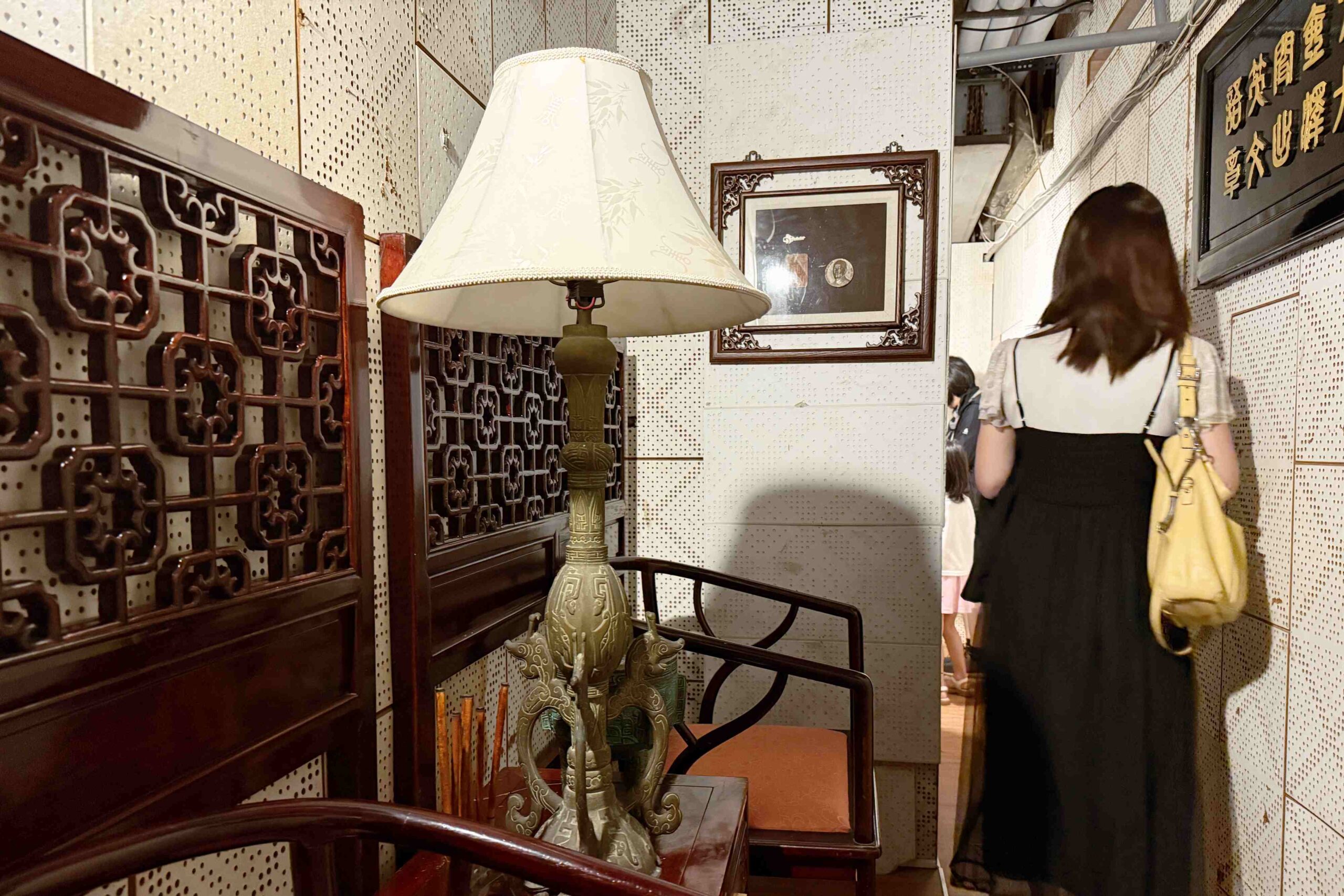
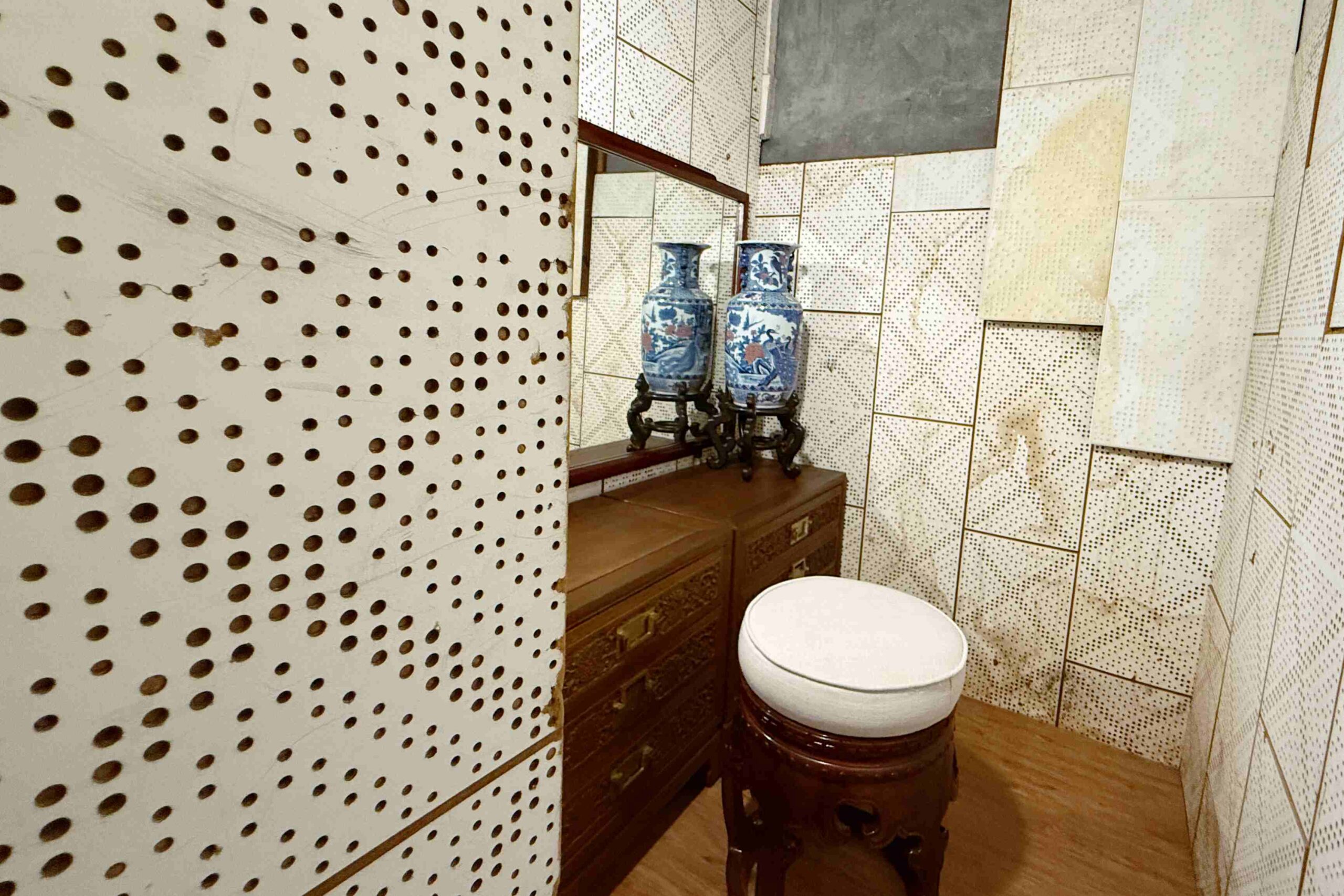
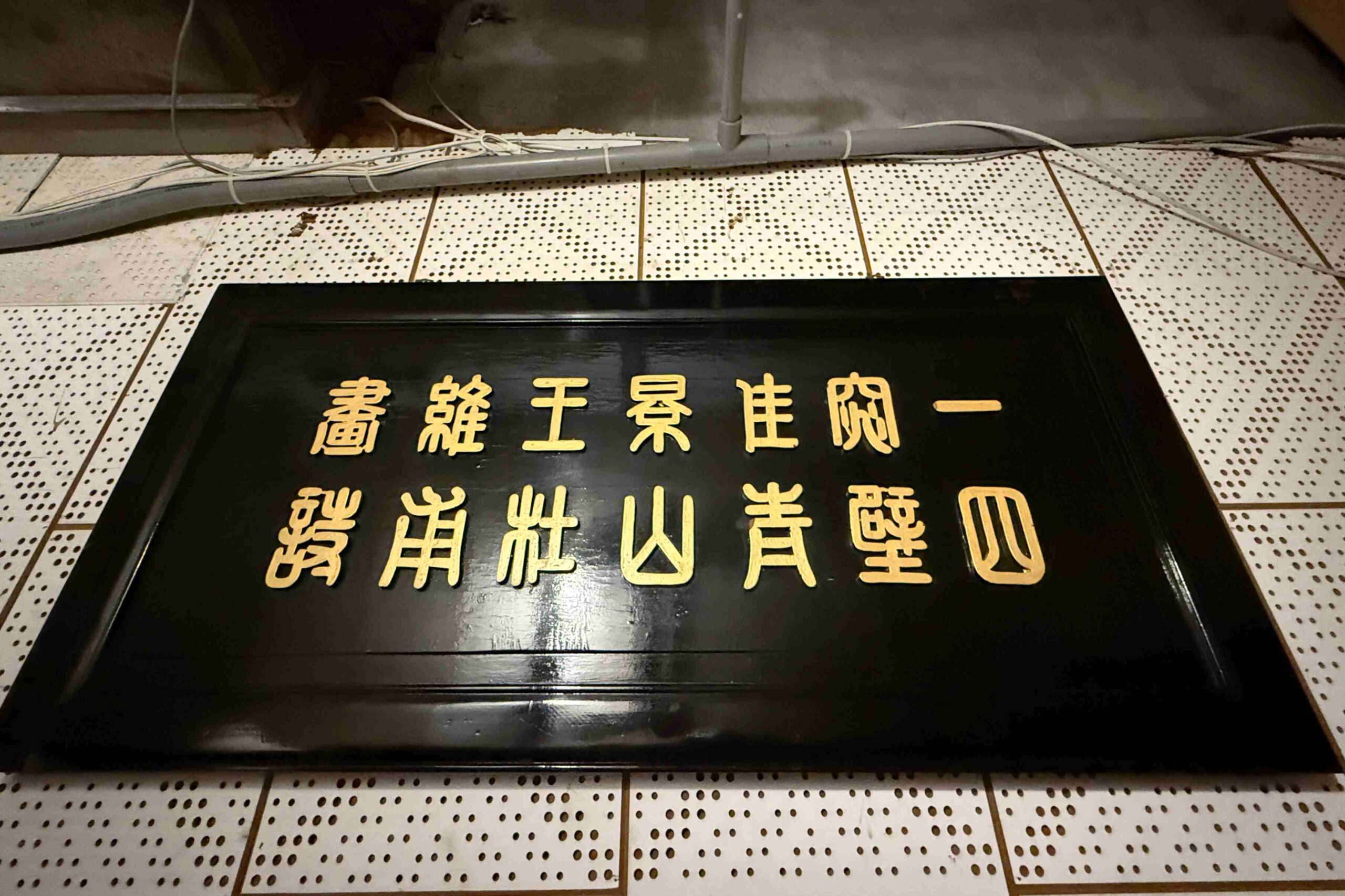
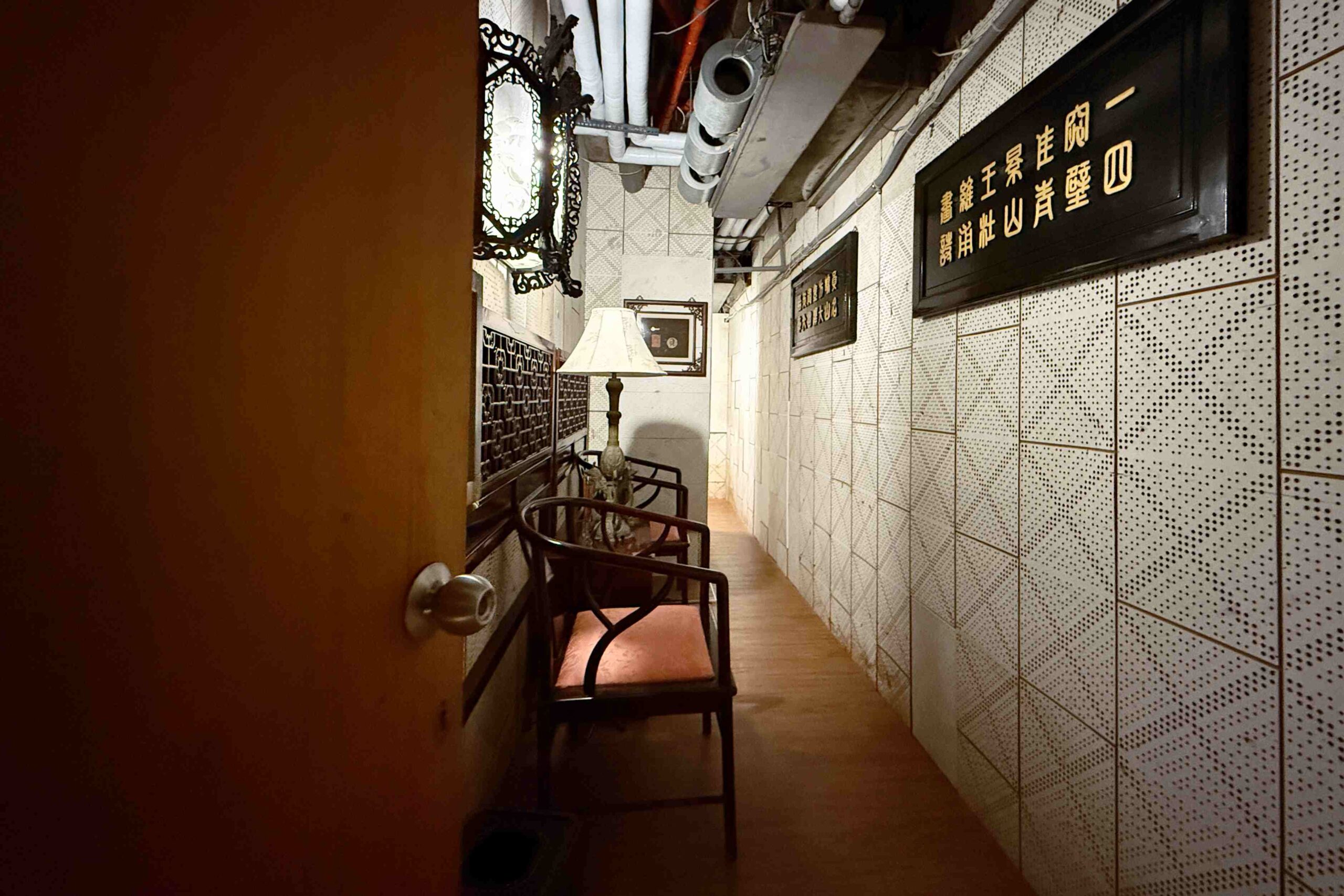
07|The Vanished Secret Room
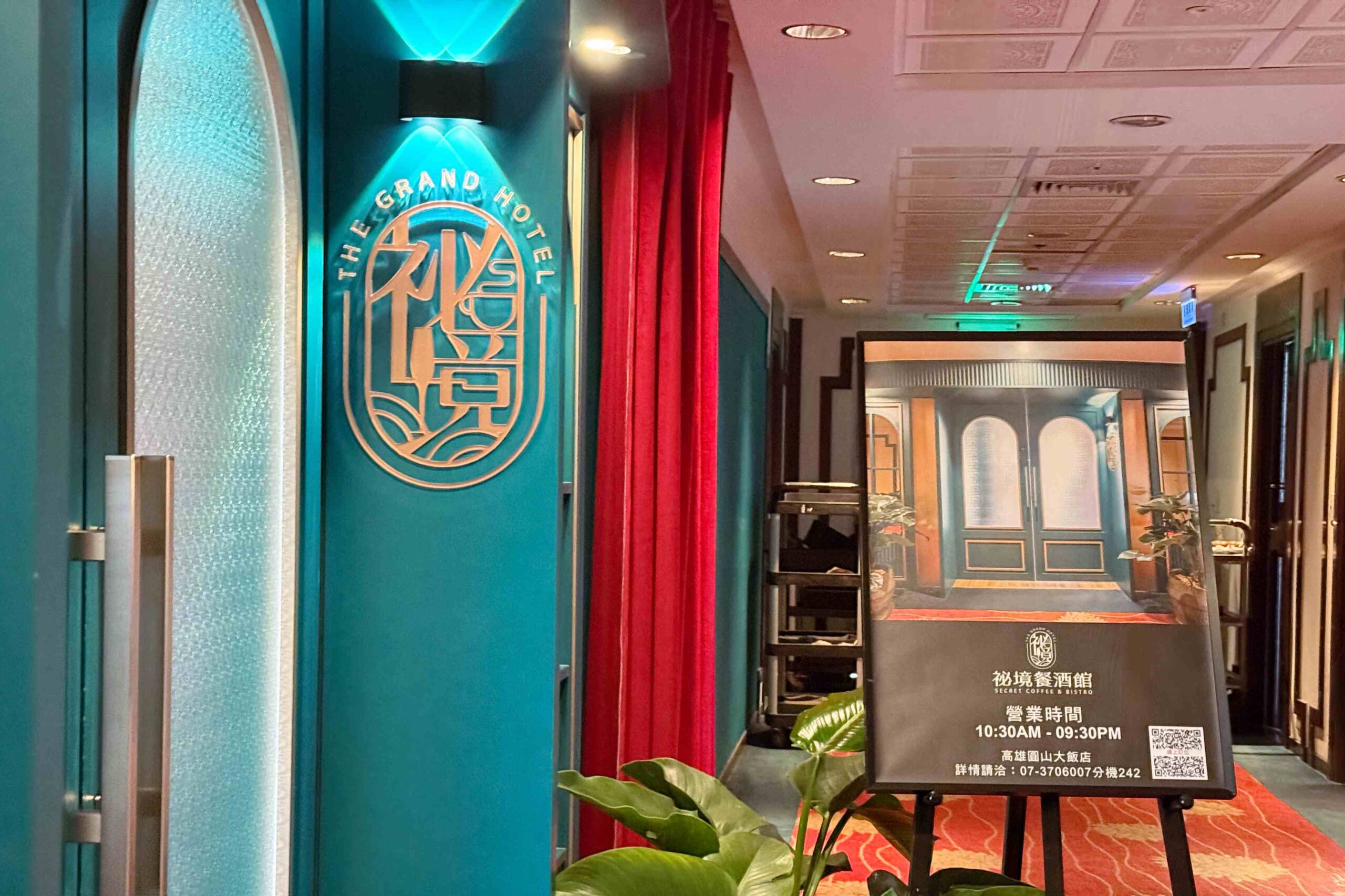
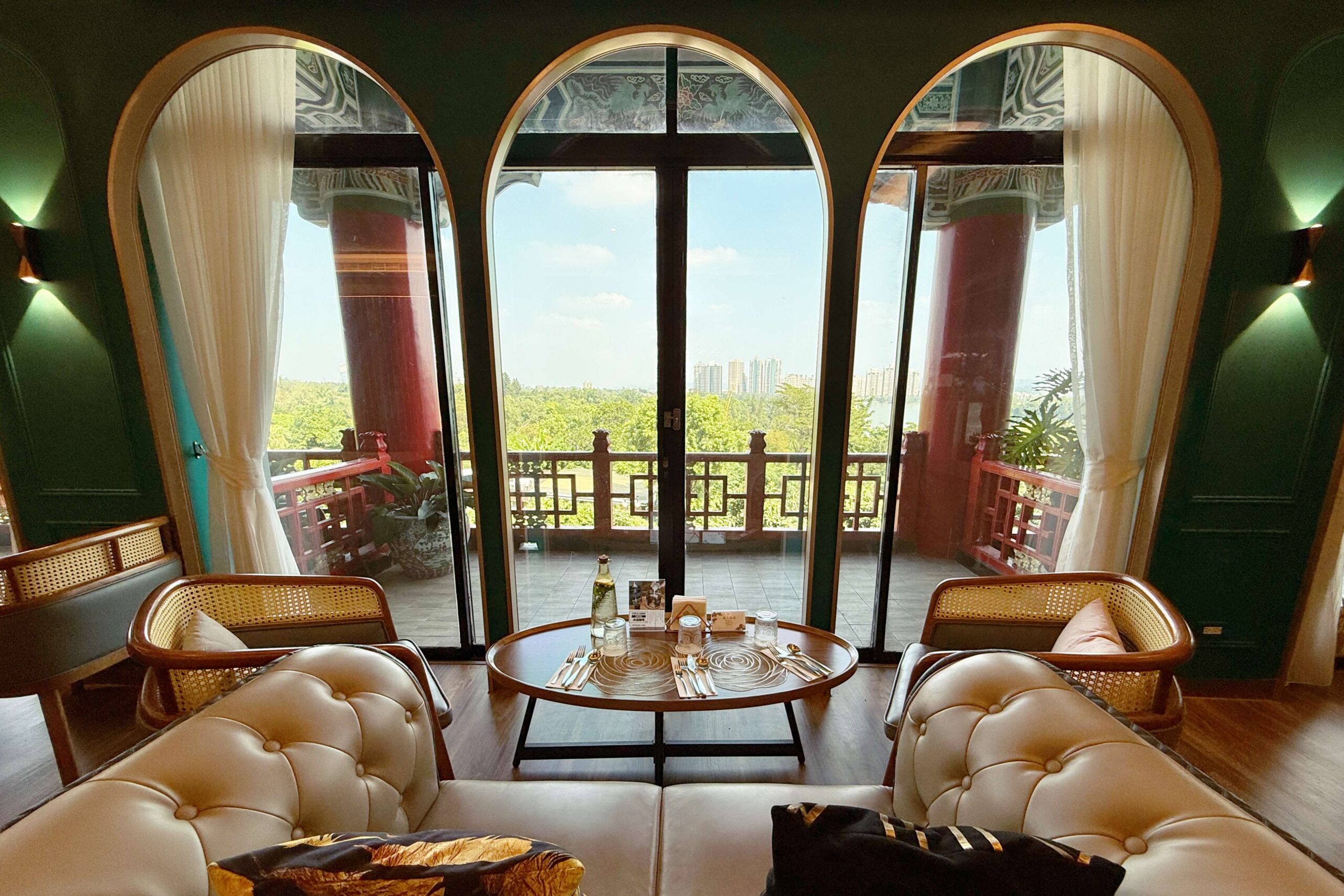
At the end of the second-floor corridor lies the Hidden Bistro, a dining and bar space converted from the former Presidential Suite once reserved for former President Chiang Kai-shek and Madame Chiang. In addition to its unobstructed lake views of Chengcing Lake, the interior design embraces a low-key yet luxurious aesthetic. Without a prior reservation, it is nearly impossible to secure a seat.
However, the true highlight today was not the bistro itself, but the “secret room”—a space almost impossible to find without a guide. As mentioned earlier, this area was once the private suite of the President and his wife, and it naturally included special spaces designed for emergencies. This secret room was previously used as Madame Chiang’s dressing room. Although it is no longer in use, the original vanity and some of the furnishings have been preserved, offering a tangible glimpse into the past.
08|Grand Hotel Earth God Shrine
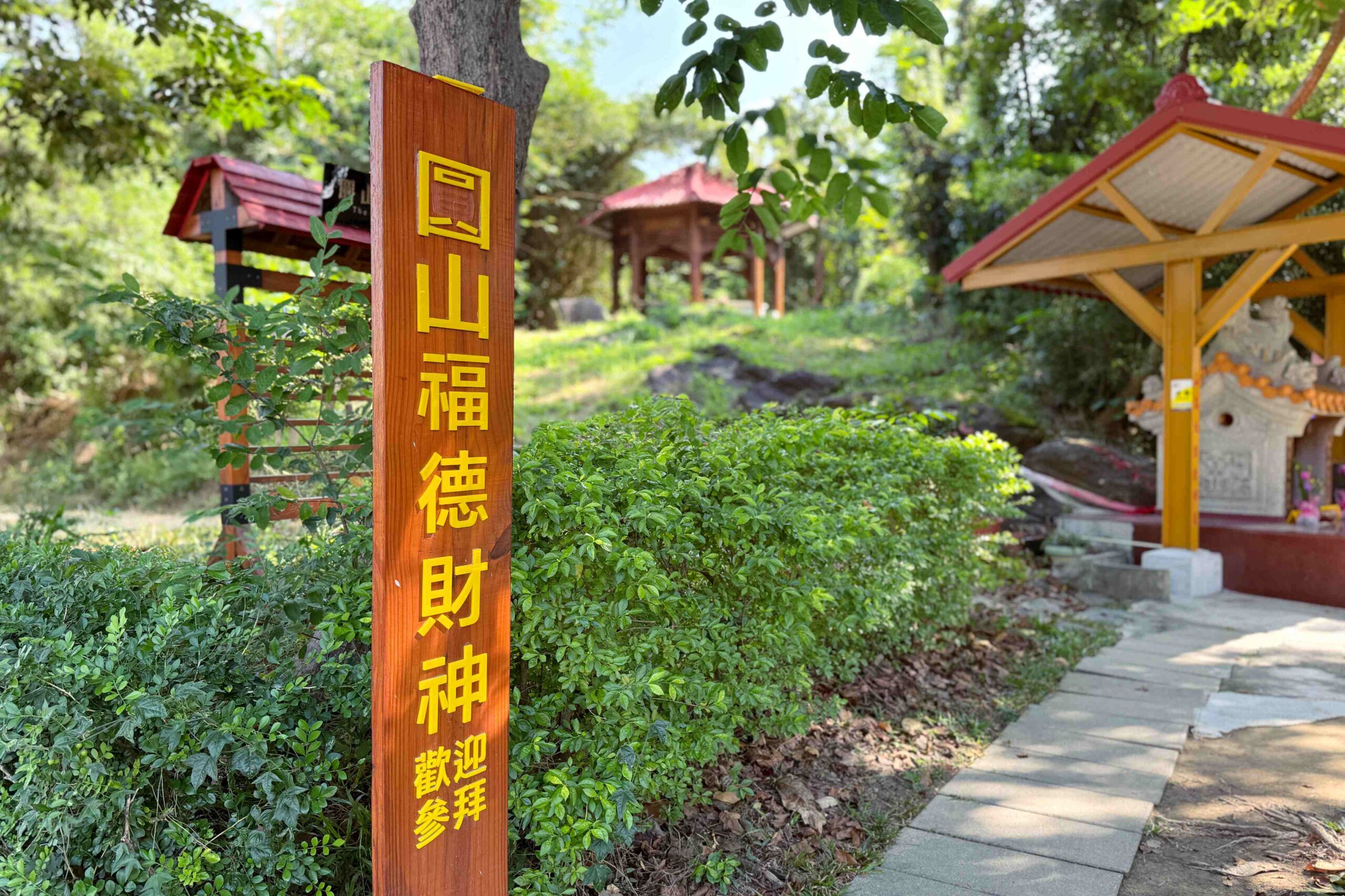
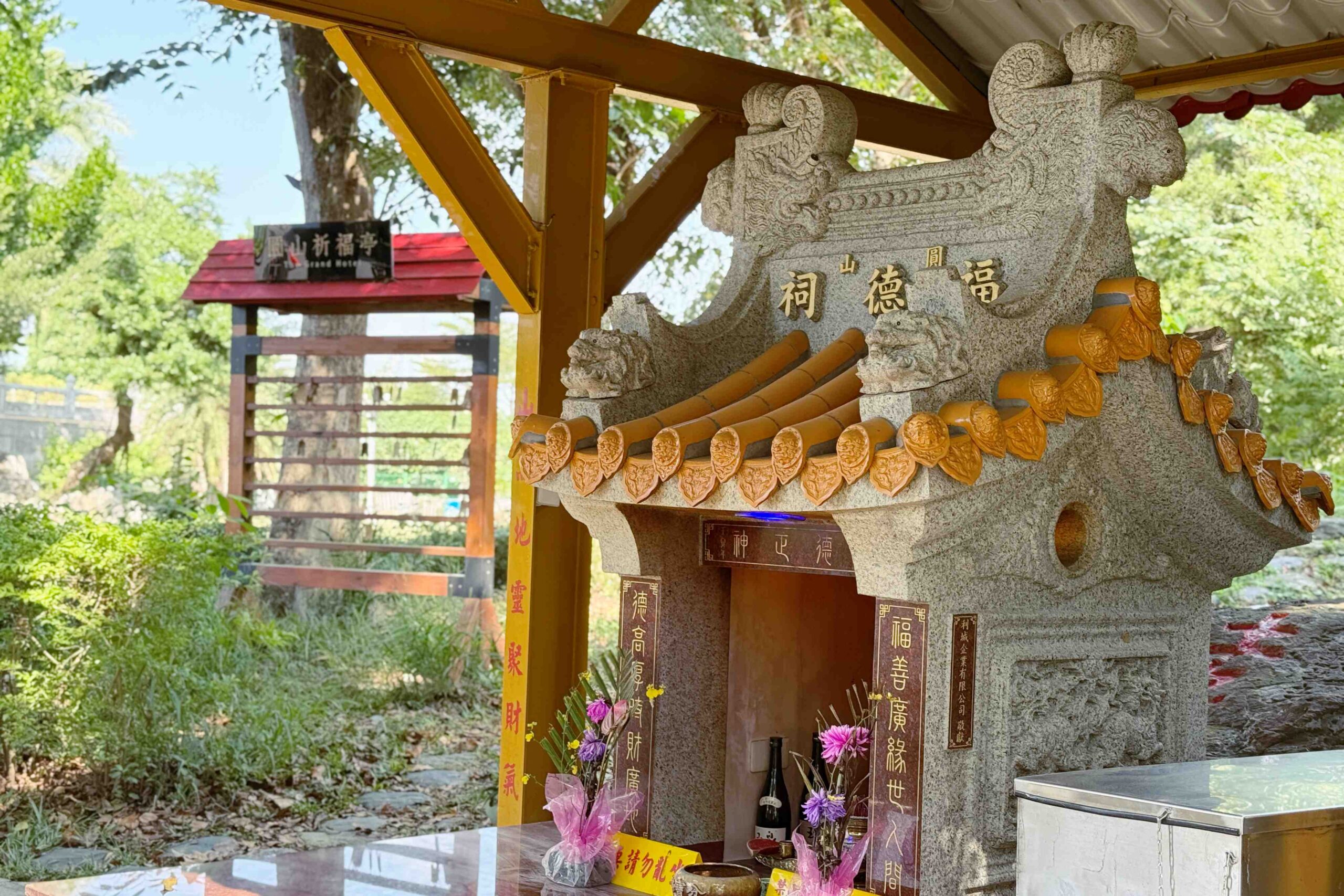
Although the Yuanshan Fude Shrine was only completed in 2022, the Earth God enshrined here can be traced back as early as 1914, during the third year of the Taishō era. Since the completion of the Grand Hotel, worship of the Earth God has continued here from 1991 onward, meaning this guardian has protected the land for more than three decades. During the Lunar New Year, the Grand Hotel holds blessing ceremonies at the shrine. If you visit during the festive season, it is well worth stopping by to pay your respects.
09|Garden Swimming Pool
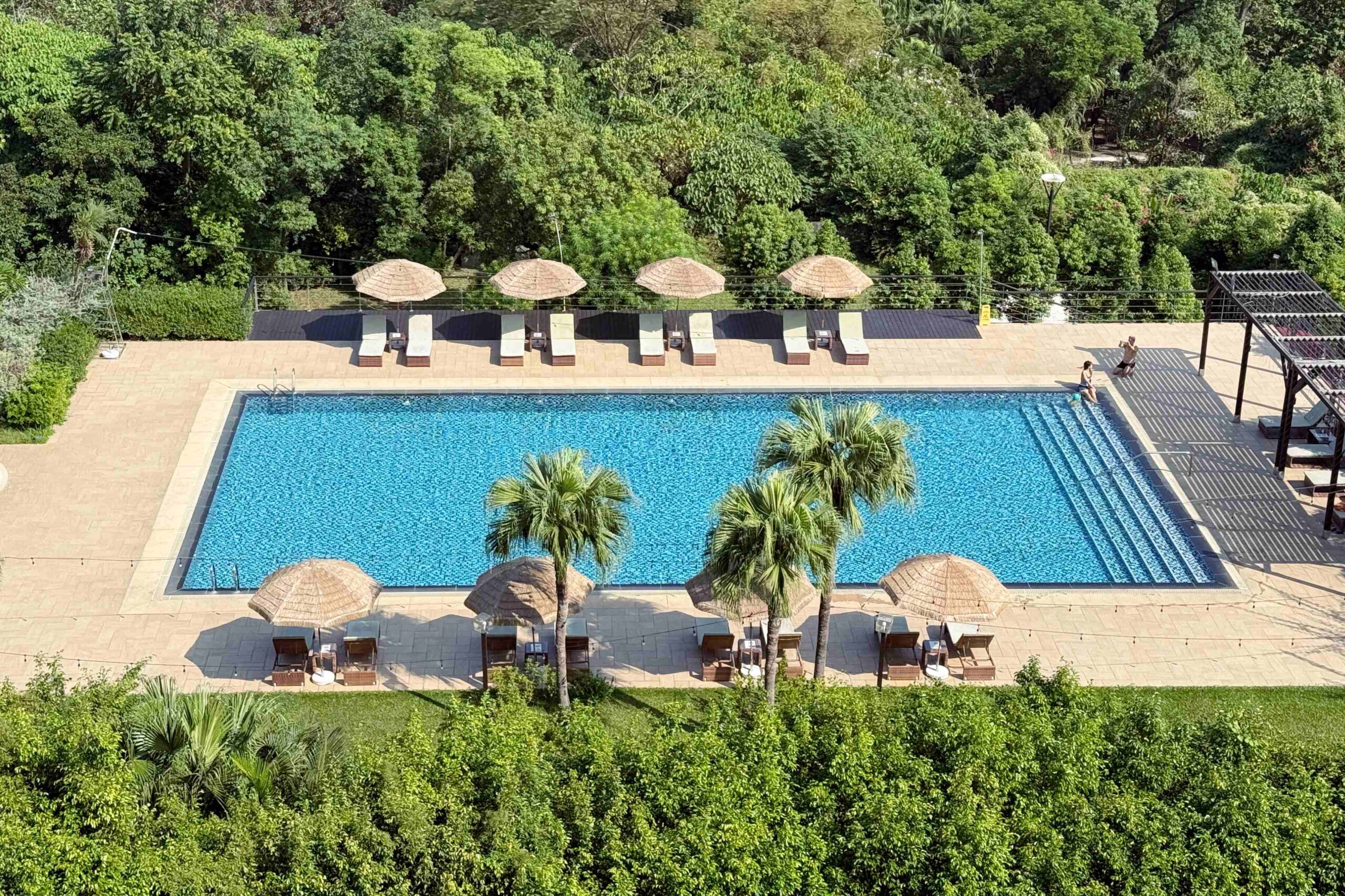
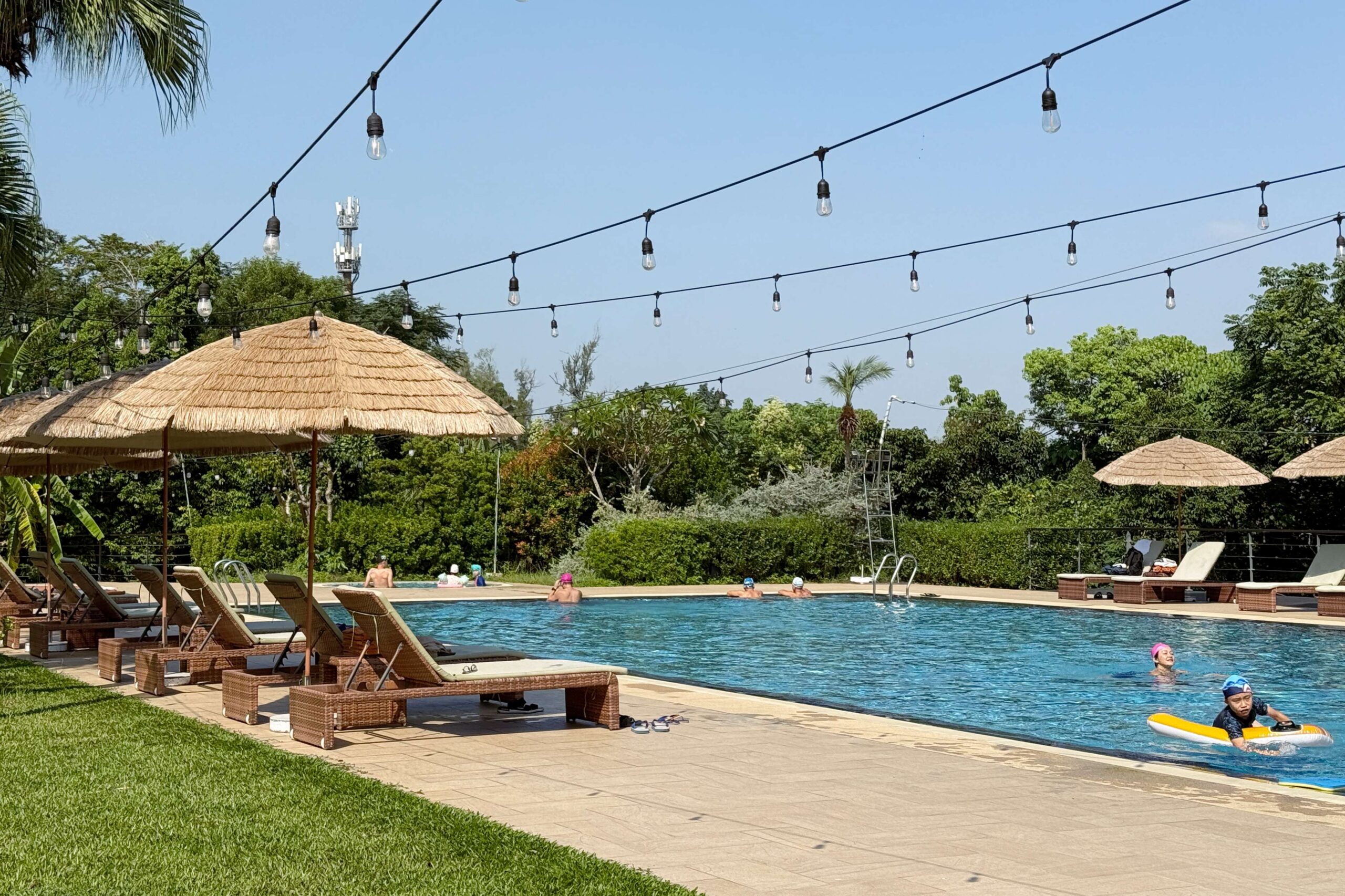
The garden swimming pool at the Grand Hotel Kaohsiung is genuinely beautiful. My relatives took advantage of the sunshine to swim a few laps and felt both relaxed and refreshed afterward. If I didn’t already live in Kaohsiung, I might very well choose to stay at the Grand Hotel just for this pool alone.
10|Grand Hotel Cultural and Creative Area
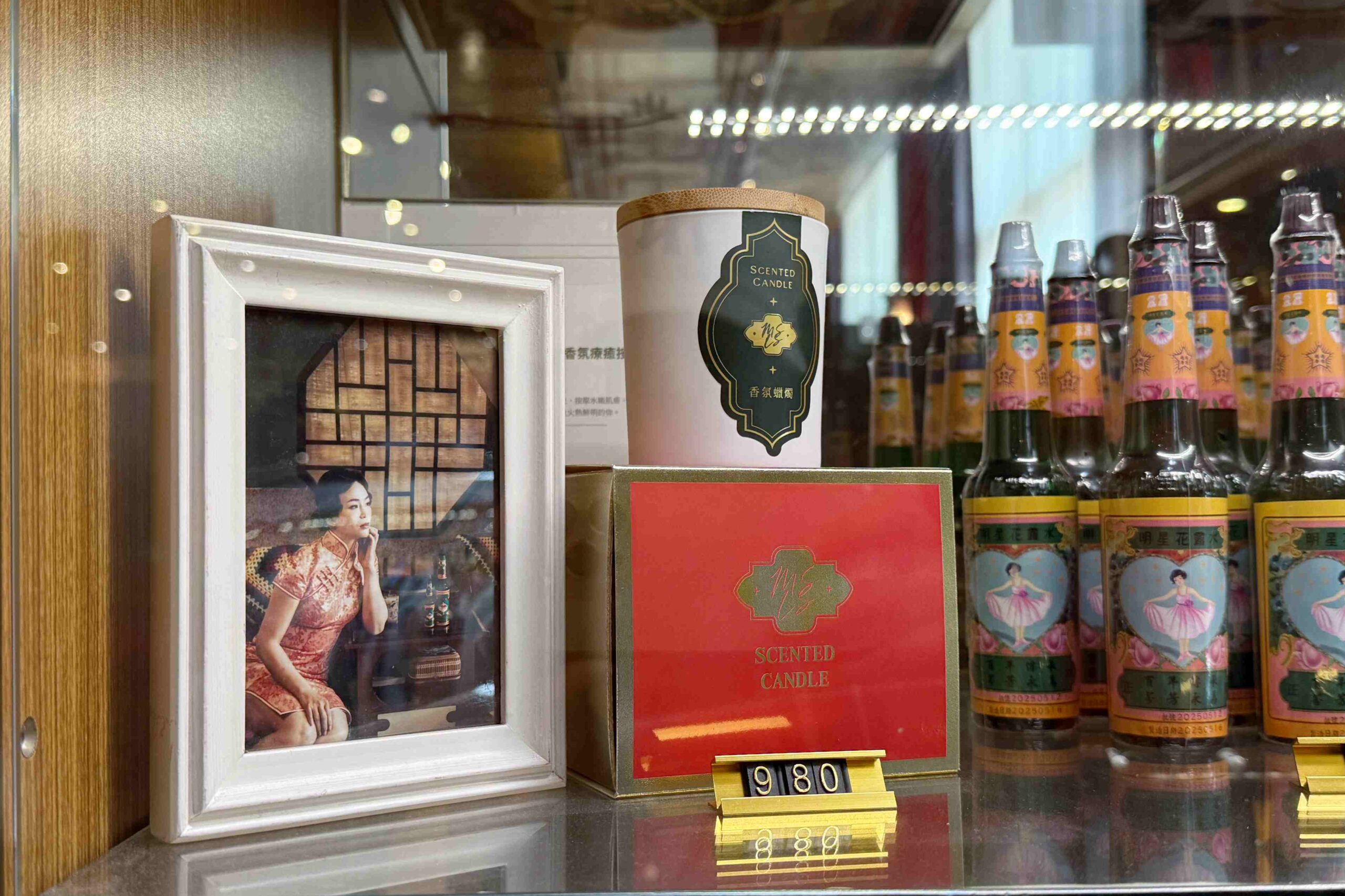
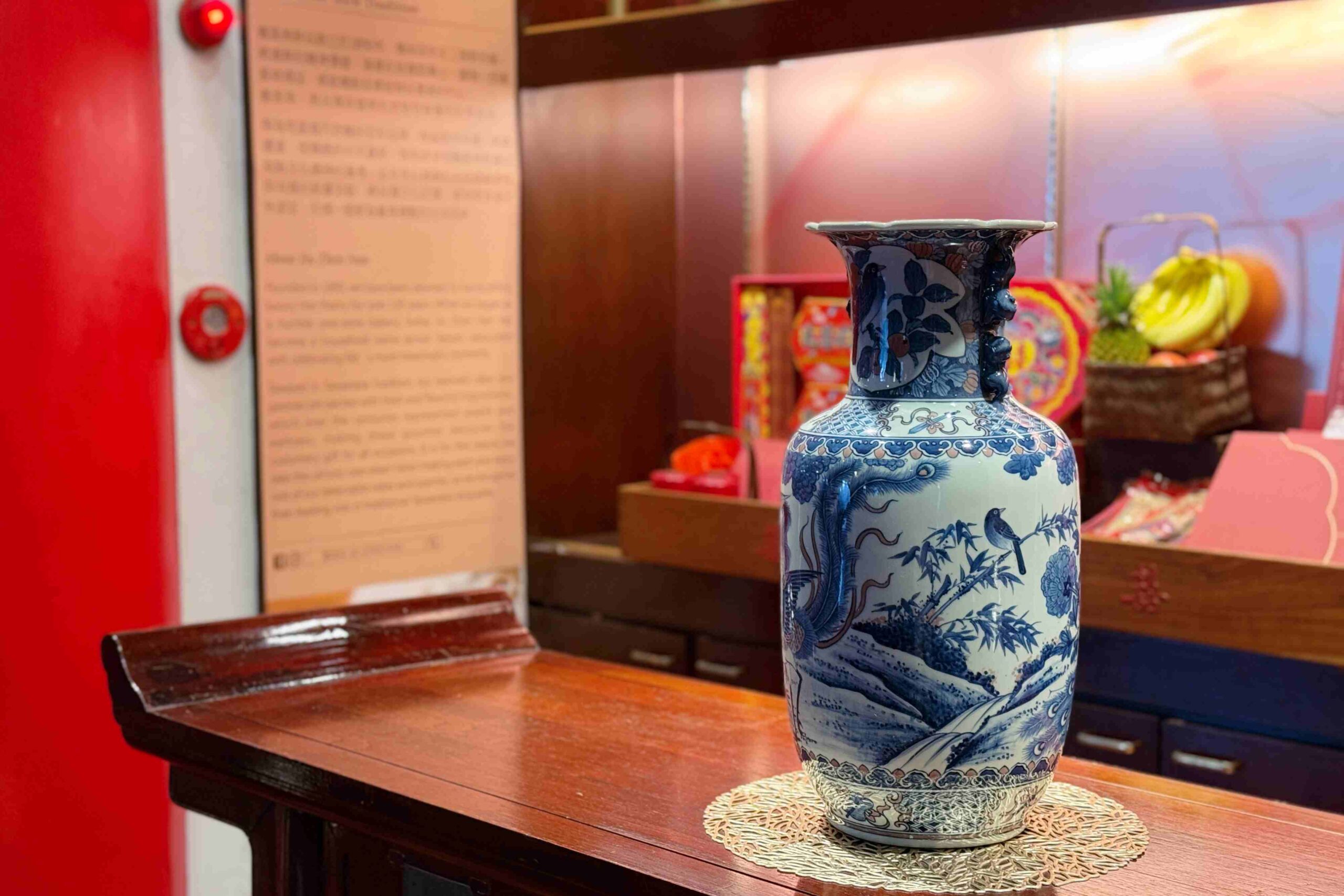
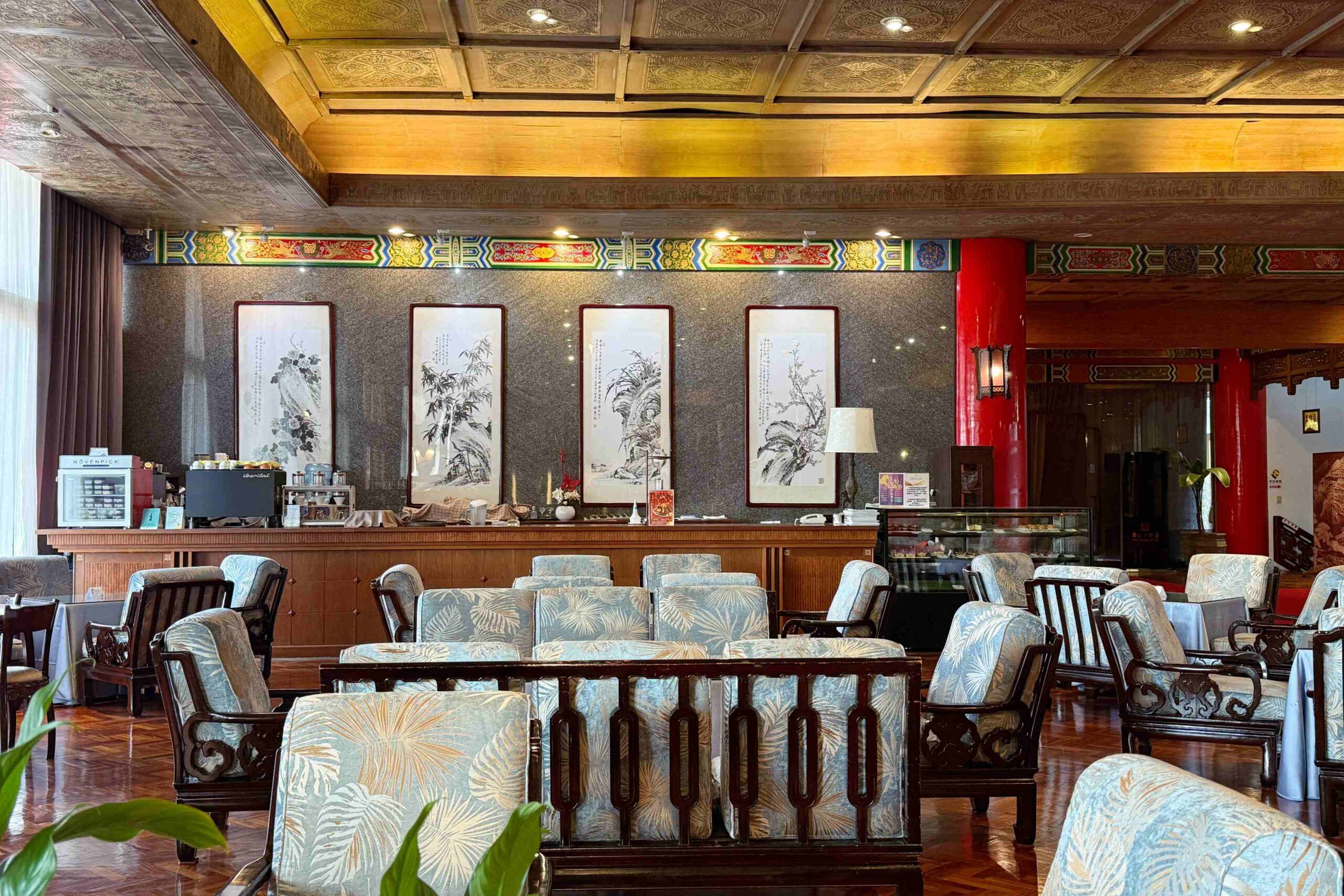
Finally, we returned to the Grand Hotel Cultural and Creative Area, located in the first-floor lobby. The space showcases a variety of nostalgic items infused with Taiwanese character, including the iconic “明星花露水” cologne that once sat on nearly every grandmother’s vanity. Back in the lobby, the manager led us to the adjacent café to collect the complimentary cold-brewed tea prepared for each adult guest. As we sipped our tea, we chatted about the tour and agreed that next time, we would definitely return to spend a proper evening at the Hidden Bistro.
◦ How to Make a Reservation
Tour Times: 9:30 a.m. and 3:00 p.m.
Tour Fees: NT$250 per adult; NT$150 per child
Reservation Hotline: +886-7-370-6007 ext. 503