Located about a two-hour drive from Chengdu, the Leshan Giant Buddha is a World Heritage Site that I had always wanted to visit. This time, I joined a local tour through Klook to Leshan. The tour included hotel pickup at 6 a.m. and returned to downtown Chengdu around 6 p.m. Although it was a packed one-day itinerary covering both the Leshan Giant Buddha and Huanglongxi Ancient Town, it was well organized, and the lunch was surprisingly good as well. I would definitely recommend it.
Contents
◦ Leshan Giant Buddha
The Leshan Giant Buddha was constructed during the Tang Dynasty and is located on Lingyun Mountain, which is why it is also known as the Lingyun Giant Buddha. The construction took a total of 90 years to complete. It is the largest stone-carved seated statue of Maitreya Buddha in the world, overlooking the confluence of the Min River, Qingyi River, and Dadu River in Leshan.
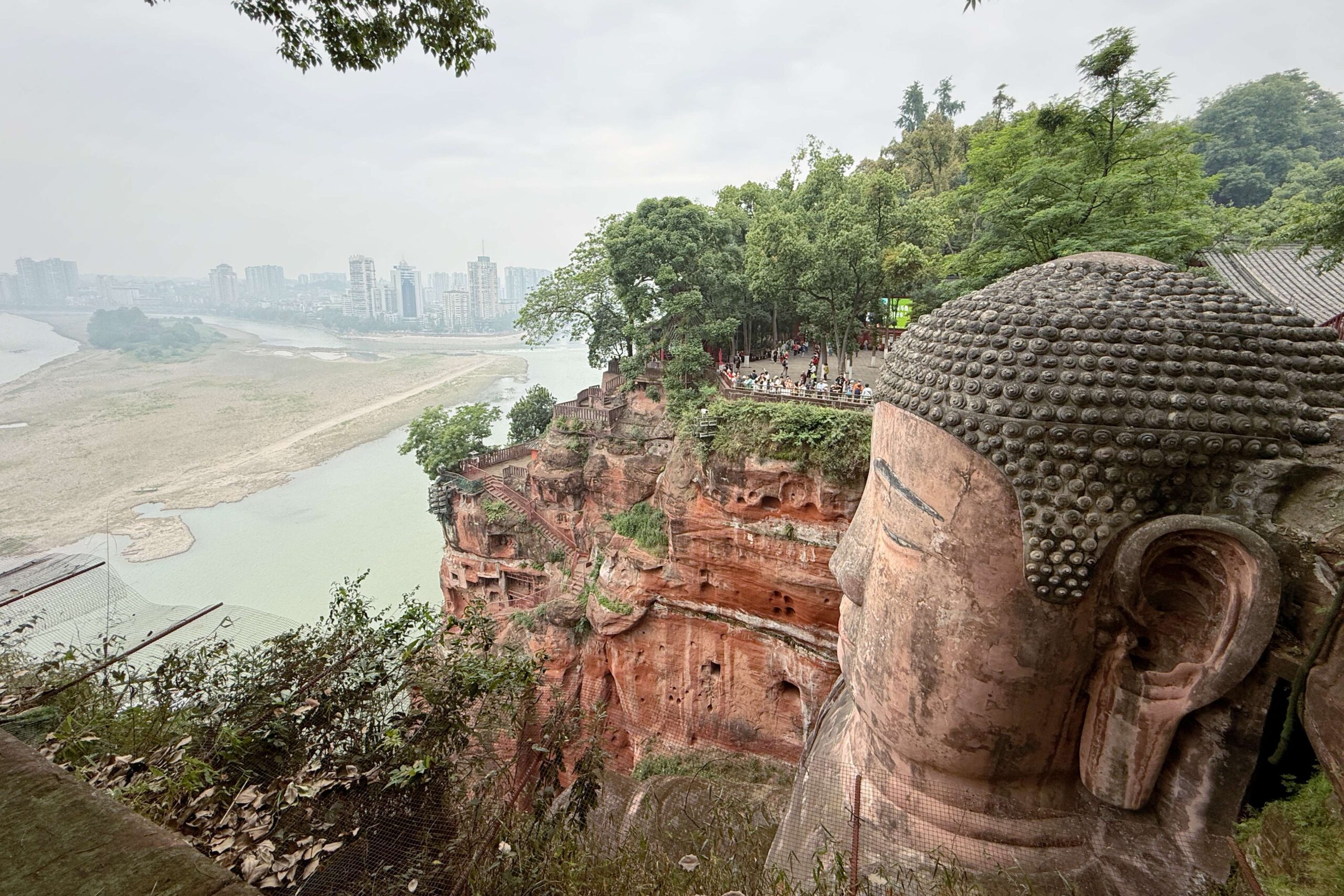
The legend behind the Buddha’s construction is deeply moving. Before the statue was built, the meeting point of the three rivers was notorious for dangerous currents and frequent boat accidents. In response, the monk Haitong vowed to carve a giant Maitreya Buddha into the cliff beside the river in hopes of calming the waters and protecting the people. Despite having neither influence nor financial resources, Haitong spent ten years traveling and collecting donations for the project. When corrupt officials later attempted to seize the donated funds, he reportedly gouged out his own eyes to demonstrate his determination to protect the donations and fulfill his mission of safeguarding all living beings. In 1996, Mount Emei Scenic Area, including Leshan Giant Buddha Scenic Area was inscribed as a UNESCO World Cultural and Natural Heritage Site.
◦ Main Attractions of Leshan Giant Buddha
01|Leshan Giant Buddha
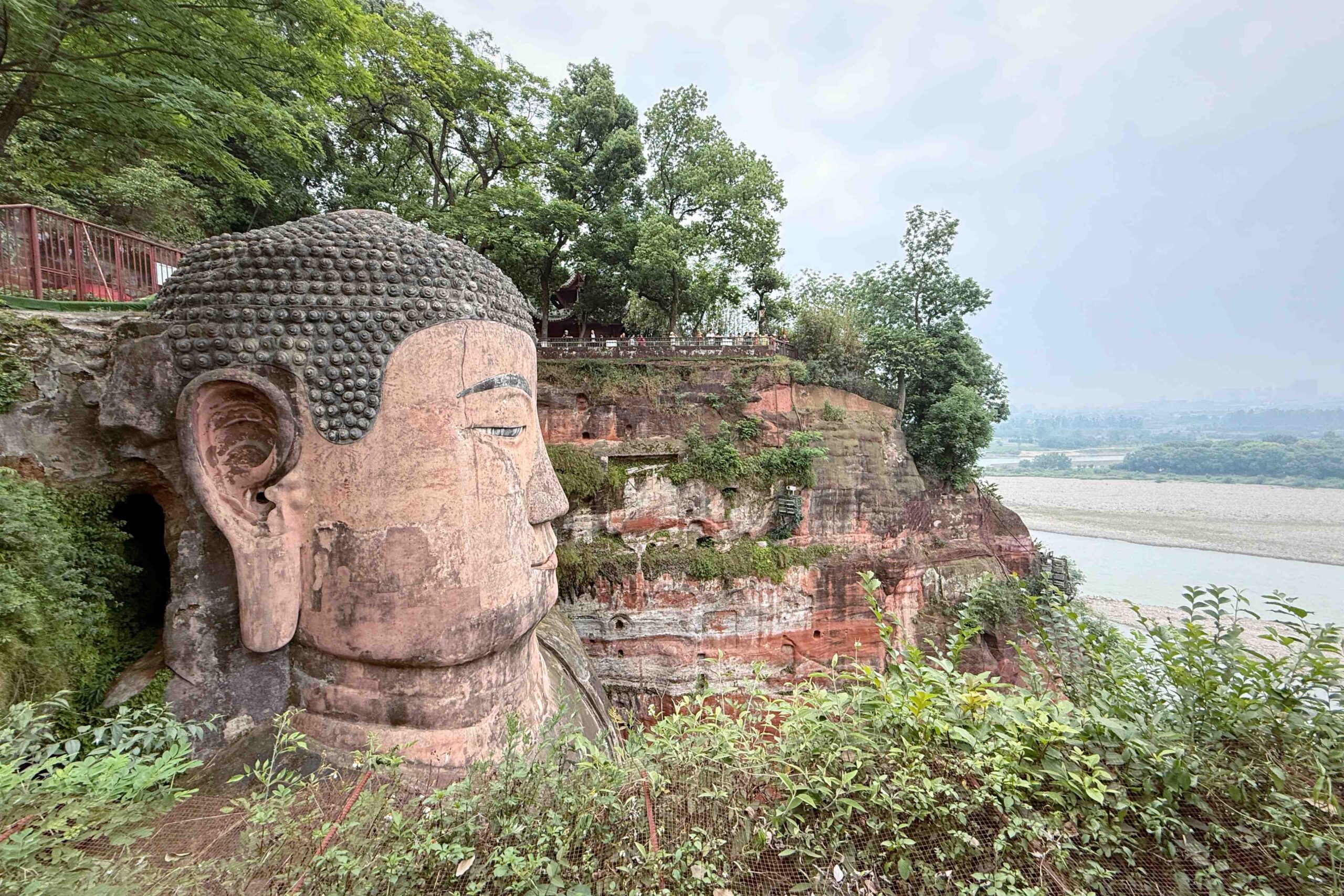
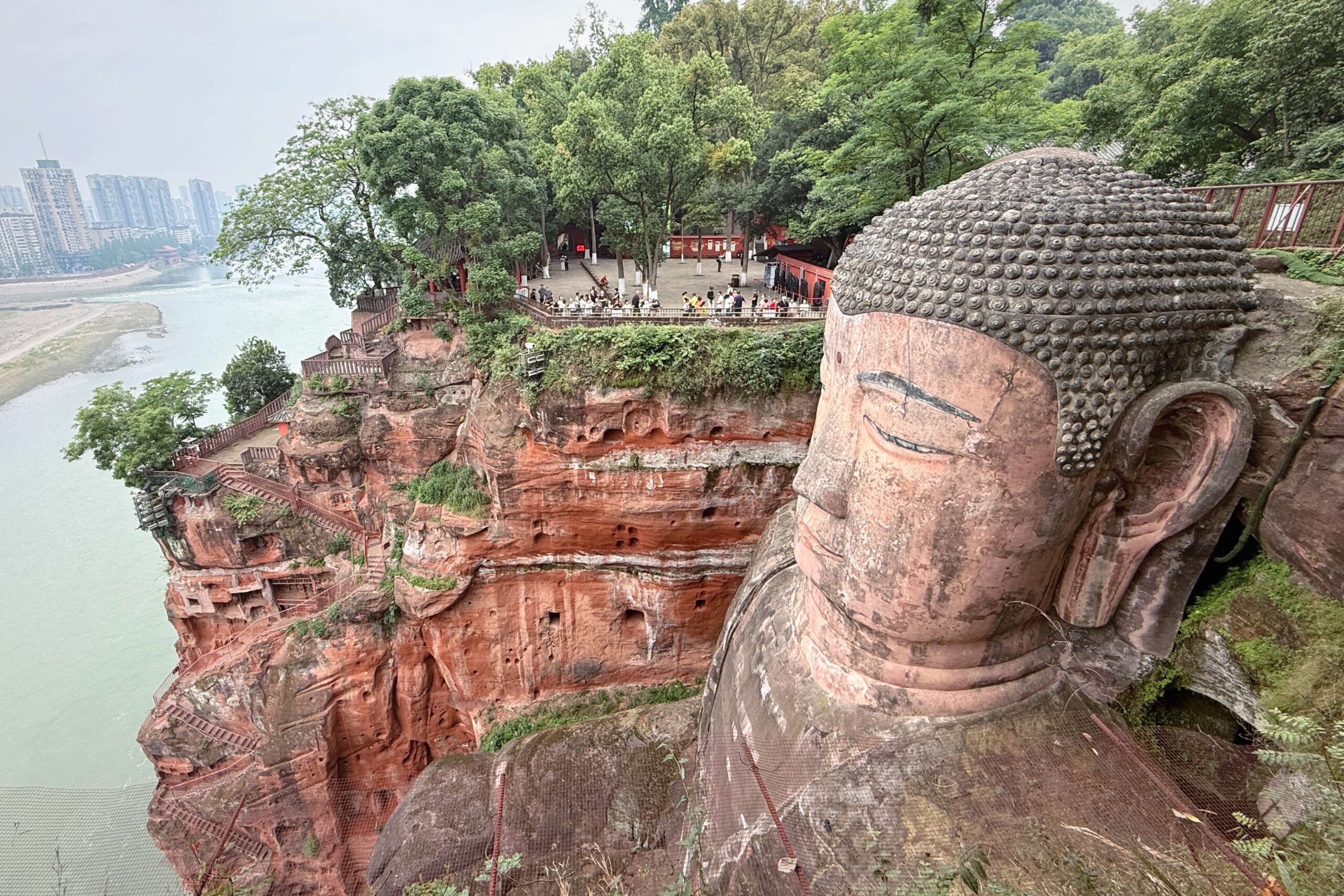
The Leshan Giant Buddha is carved directly into the mountainside , the mountain itself forms a Buddha, and the Buddha becomes part of the mountain. Walking up Lingyun Mountain allows visitors to look down from the Buddha’s head toward the body below. Up close, you can also observe the ancient drainage channels hidden within the statue, as well as the ventilation holes inside the ears. These ingenious engineering techniques have helped preserve the Buddha remarkably well over the centuries.
02|At the Buddha’s Feet
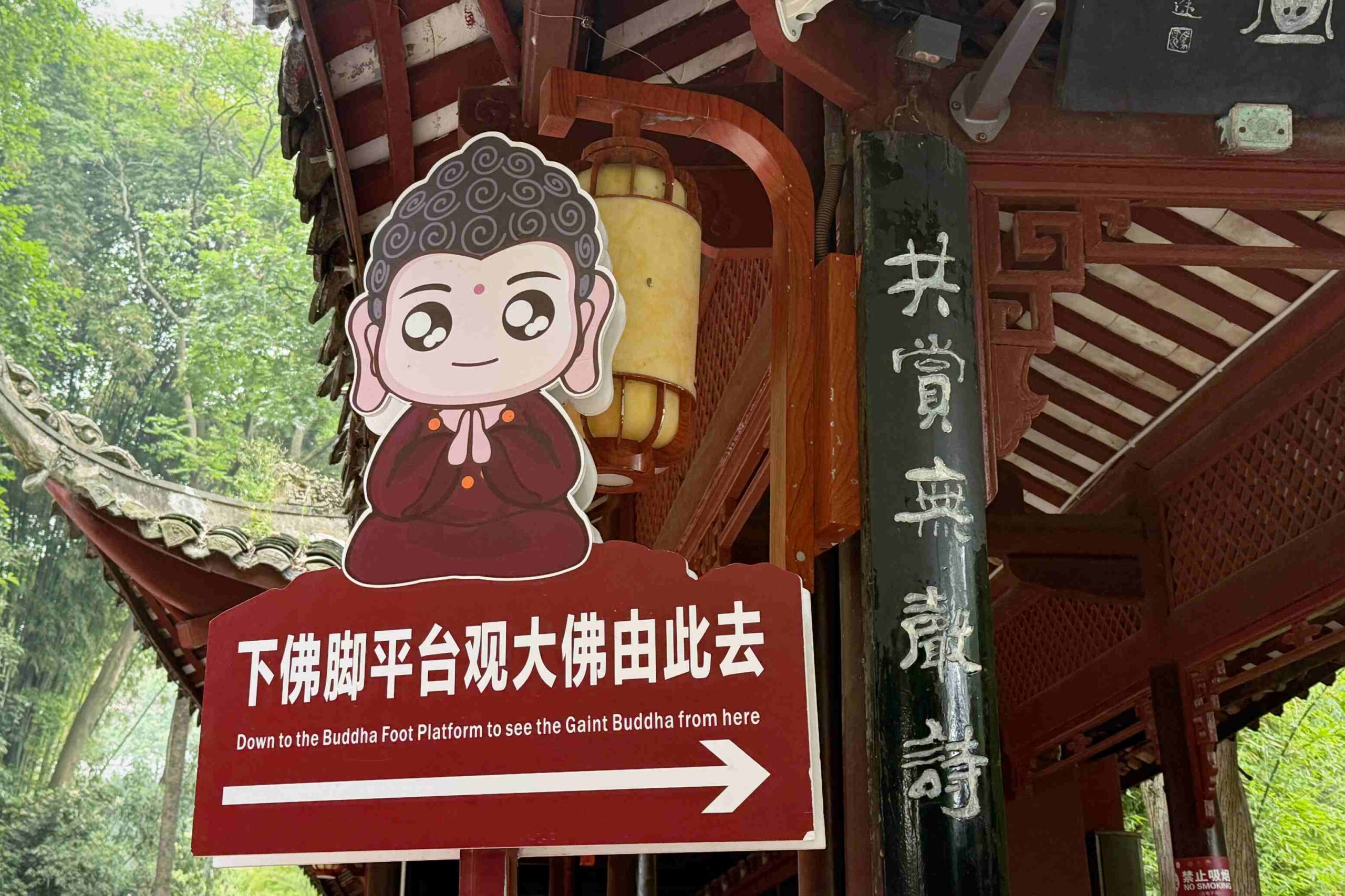
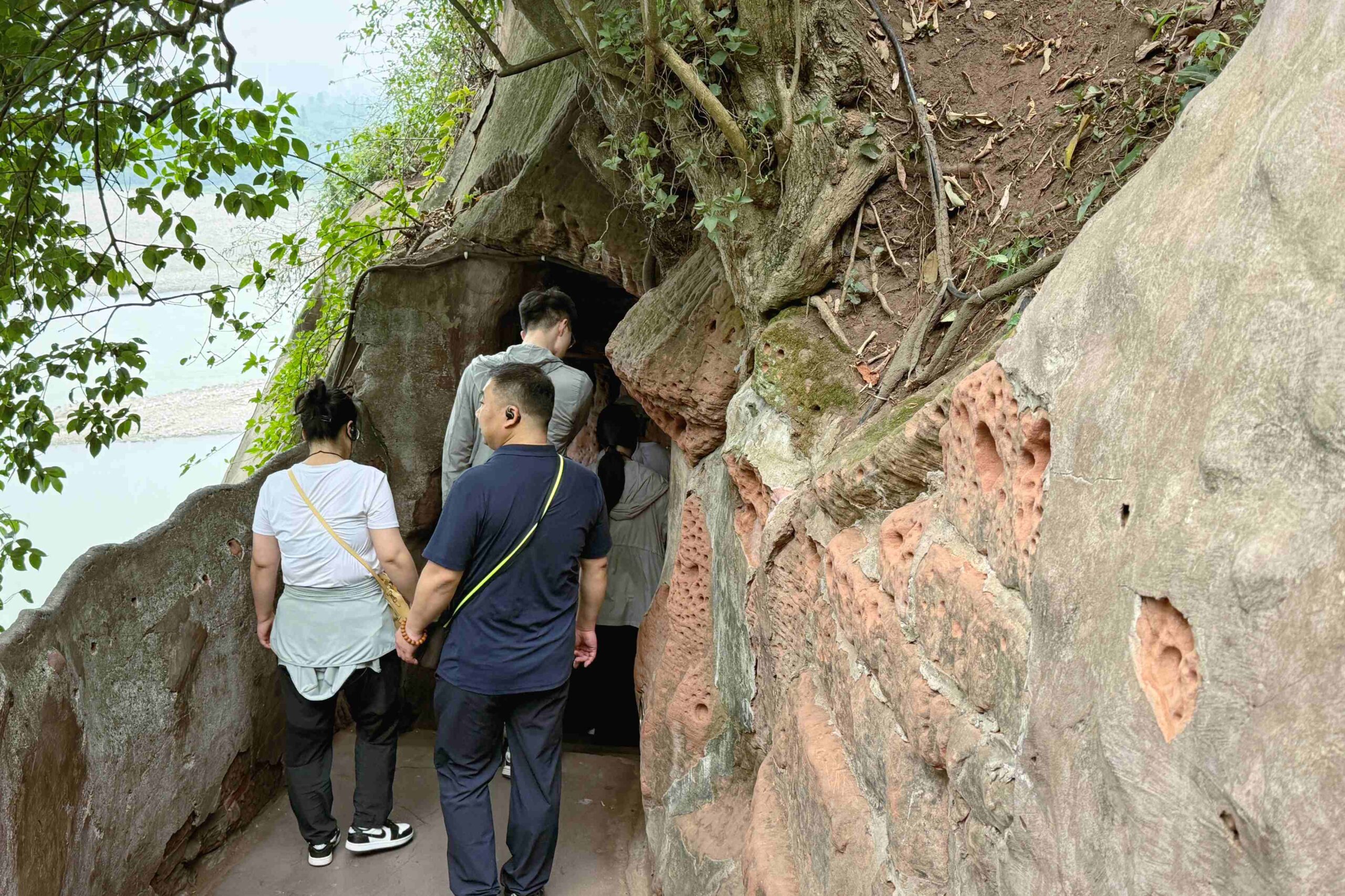
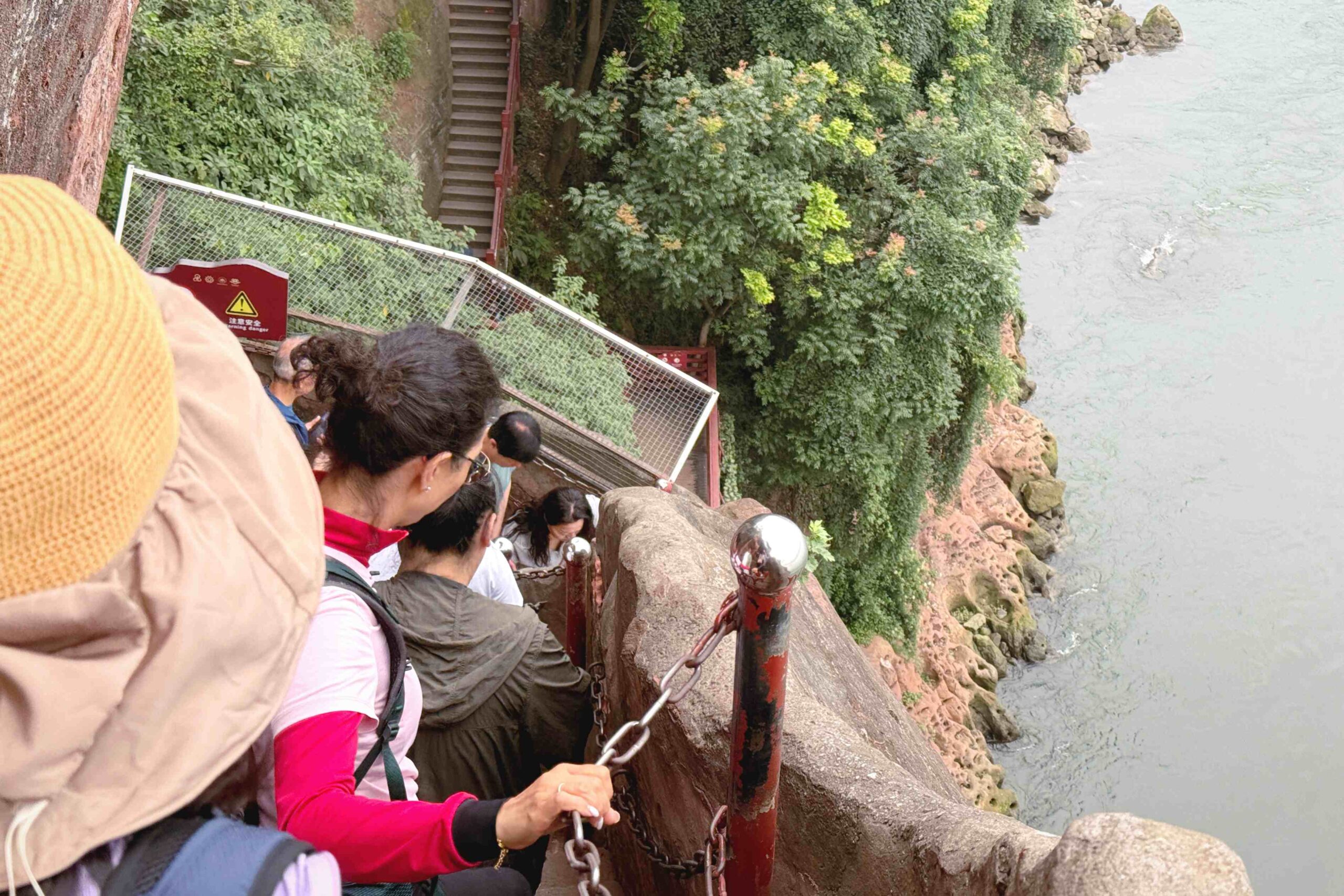
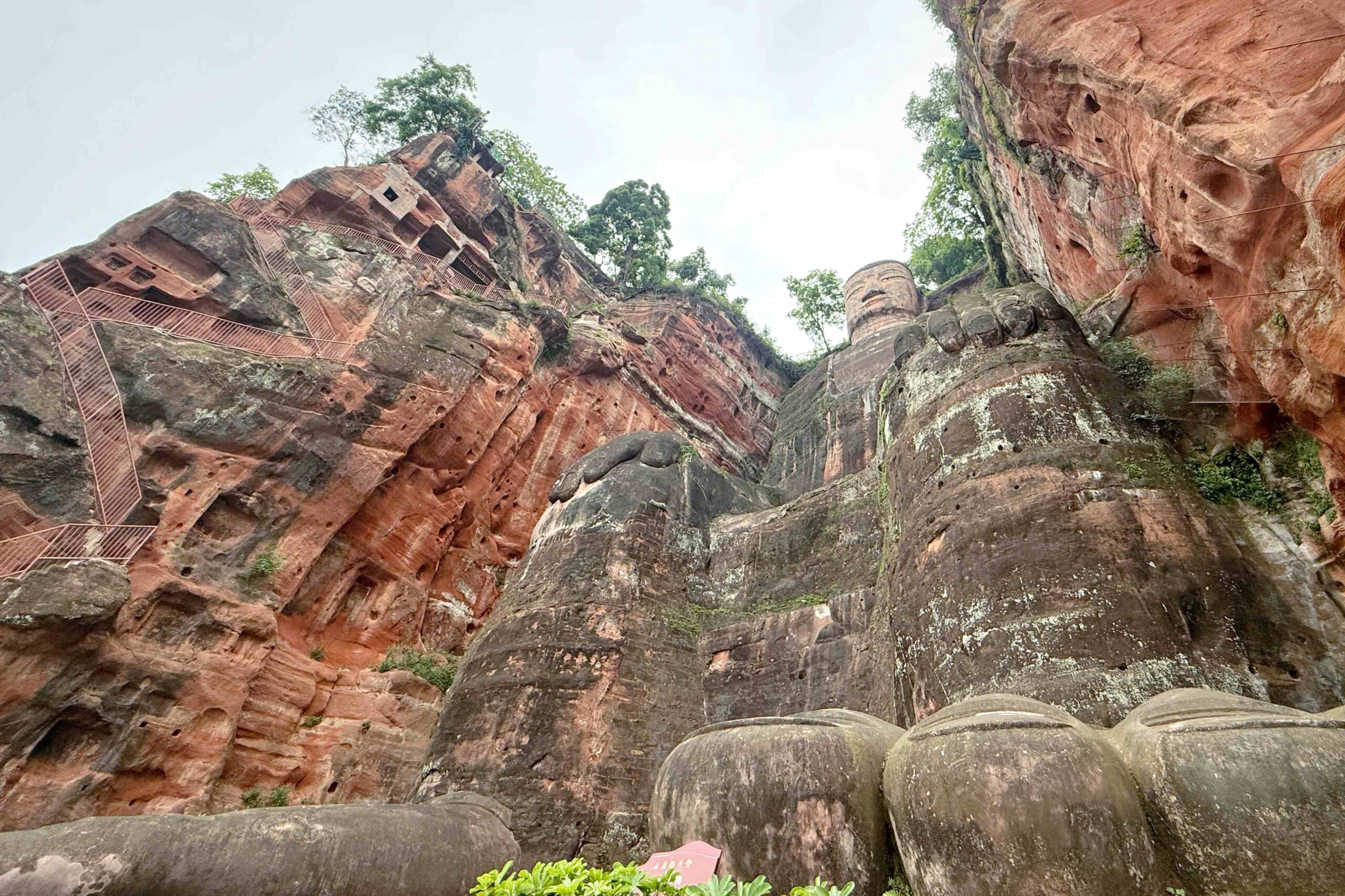
After climbing the 333 steps to the Leshan Giant Buddha, visitors can only overlook the Buddha’s body and the meeting point of the three rivers from above. To fully appreciate the scale of the statue, you need to descend to the foot of the Buddha and view it from below. The round trip along the narrow Jiugu Qu Plank Road takes about 30–40 minutes. The river scenery along the way is beautiful, so it is worth setting aside enough time for the descent. However, if you are afraid of heights, you may want to consider your physical comfort before taking this route.
03|Lingyun Temple
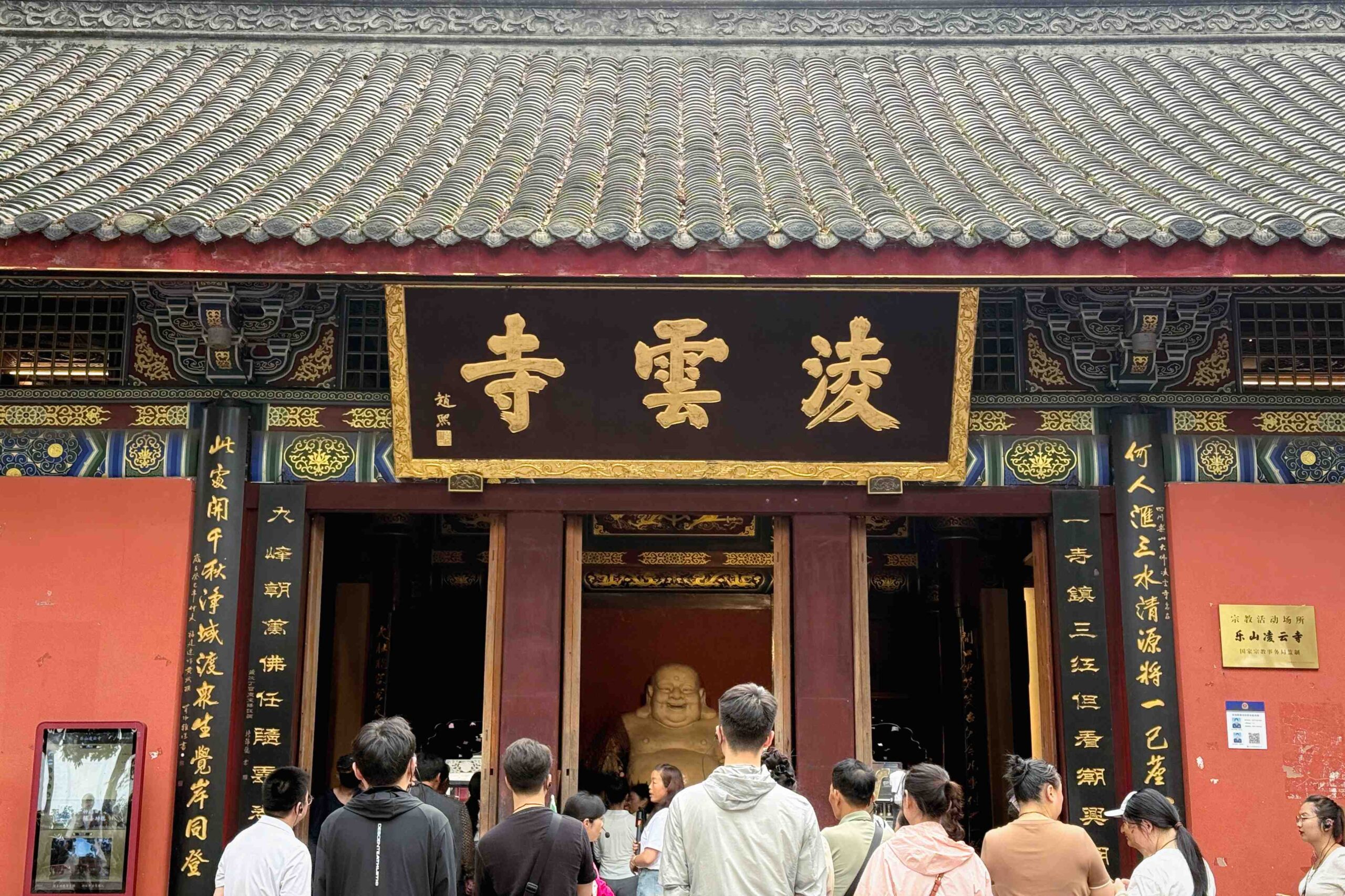
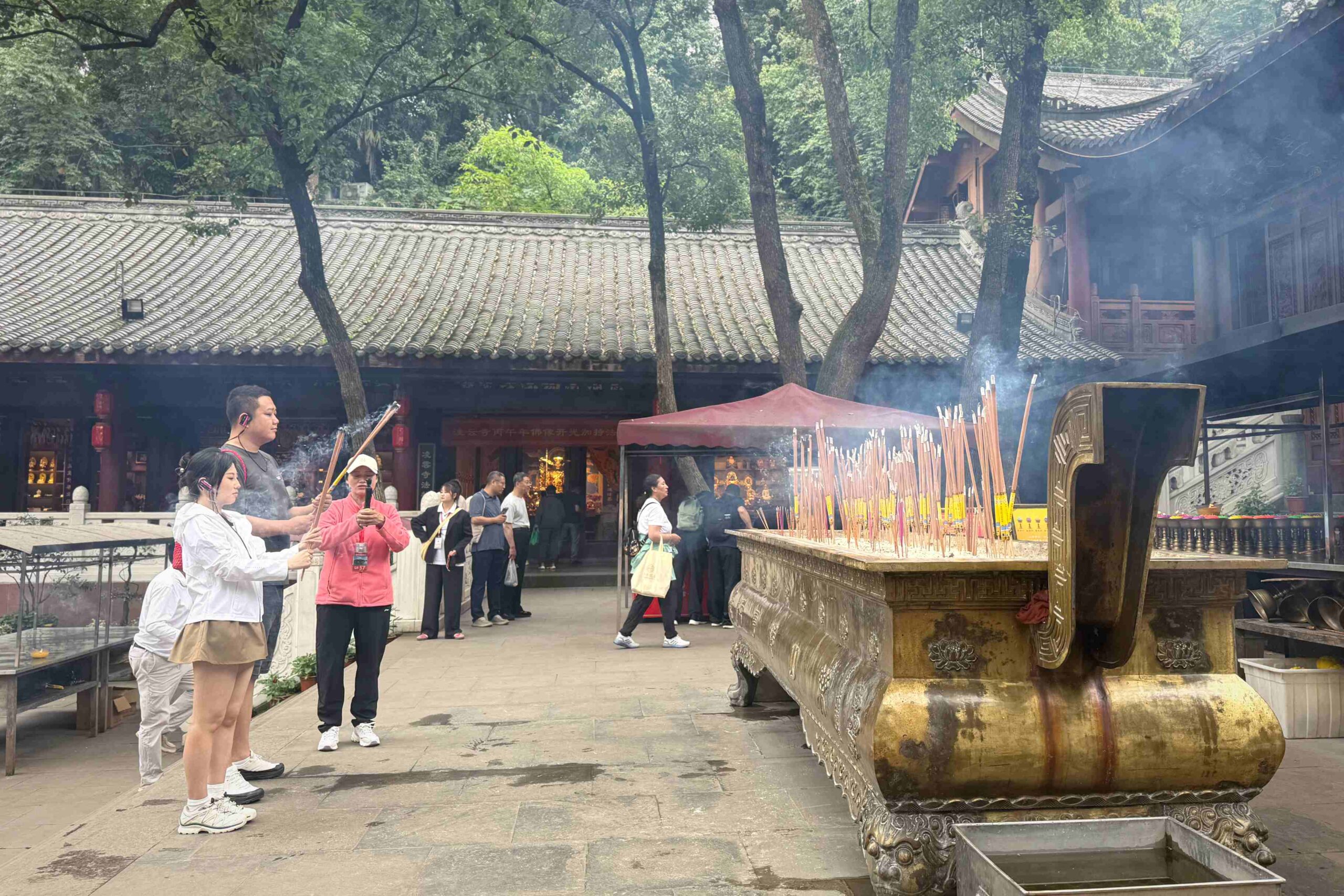
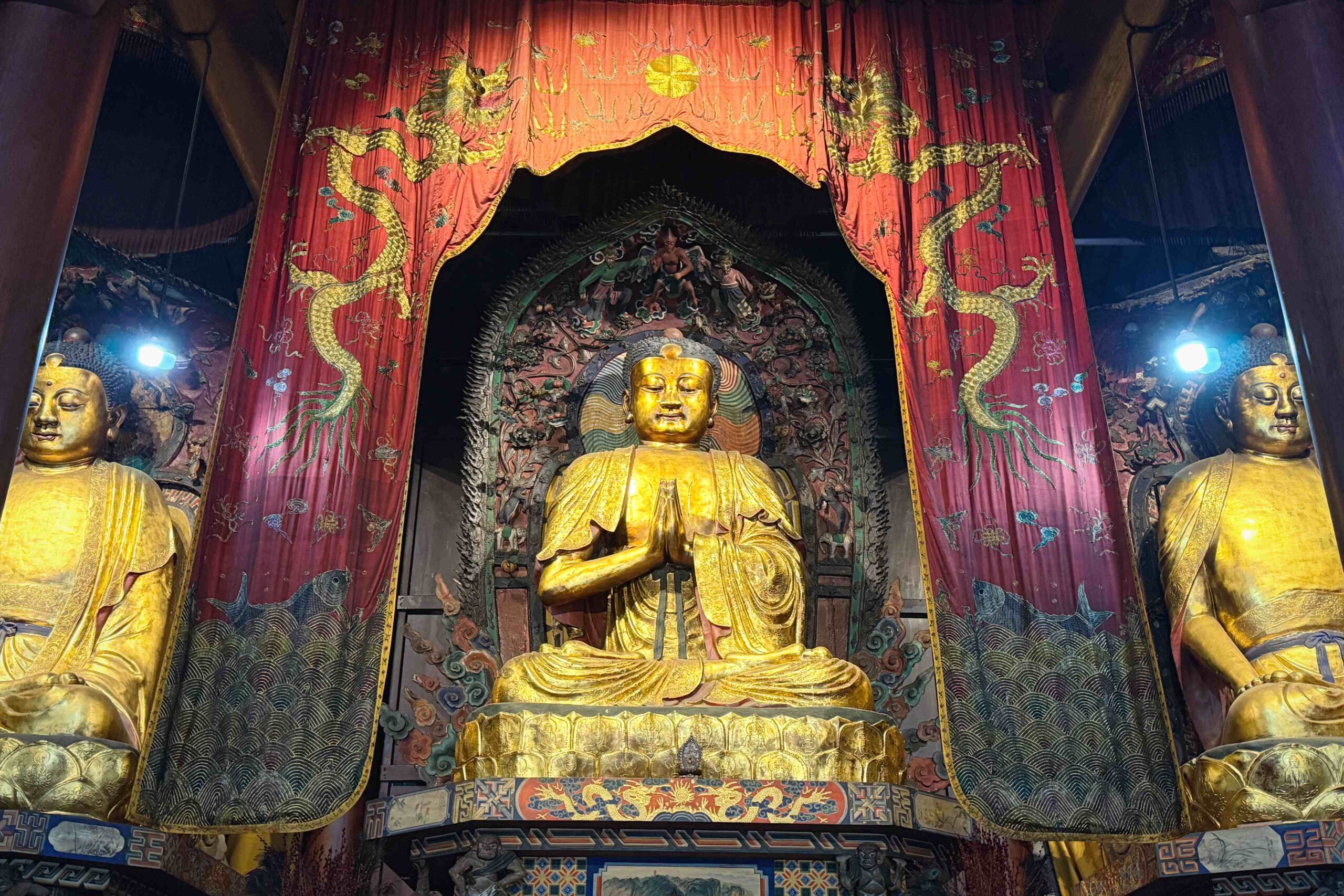
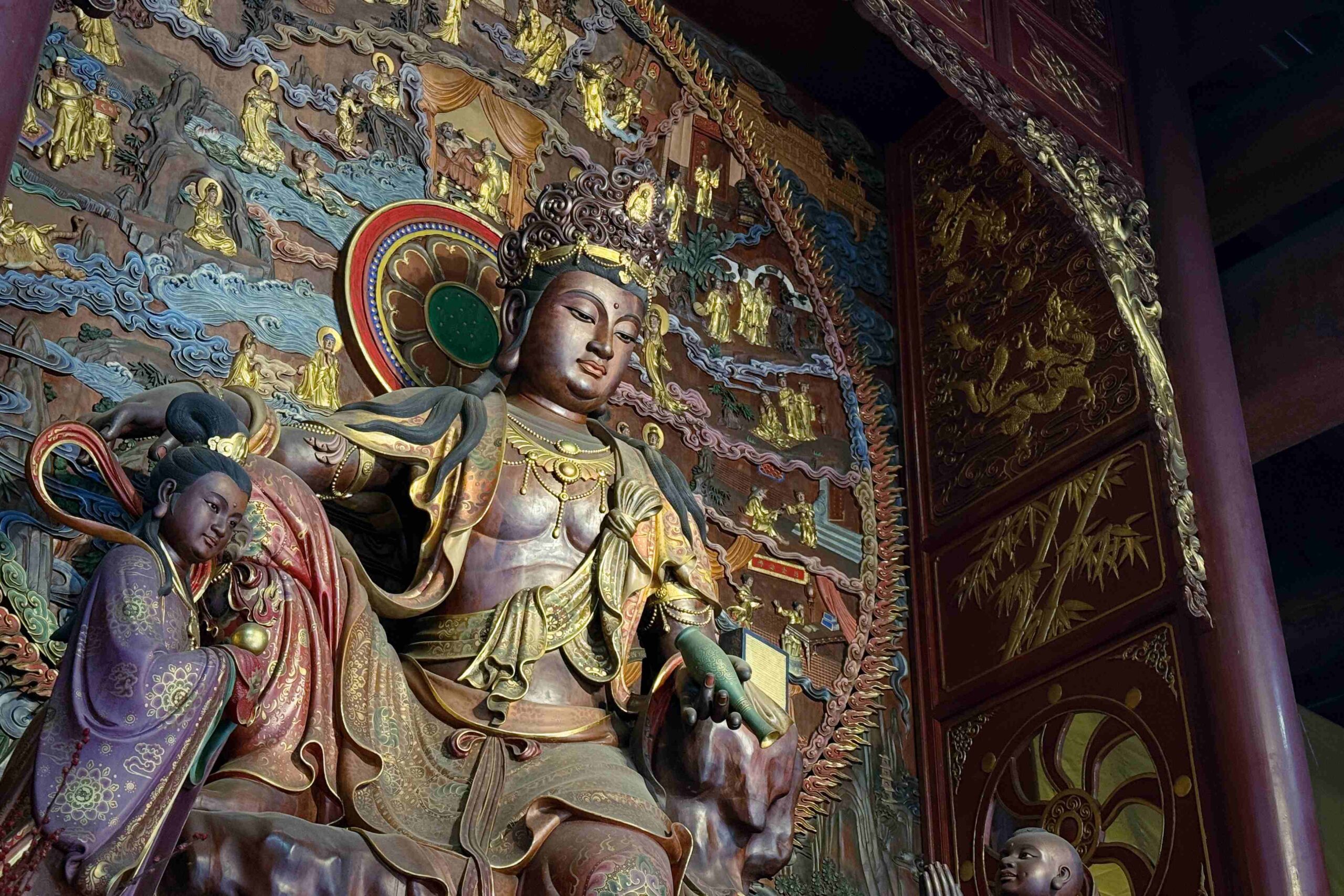
Lingyun Temple was originally built during the Tang Dynasty. The Buddhist statues inside are beautifully crafted, and the ones that left the deepest impression on me were Guanyin and the other Bodhisattvas. The temple also houses valuable cultural relics and murals, and it is considered one of the important auxiliary structures connected to the Leshan Giant Buddha complex.
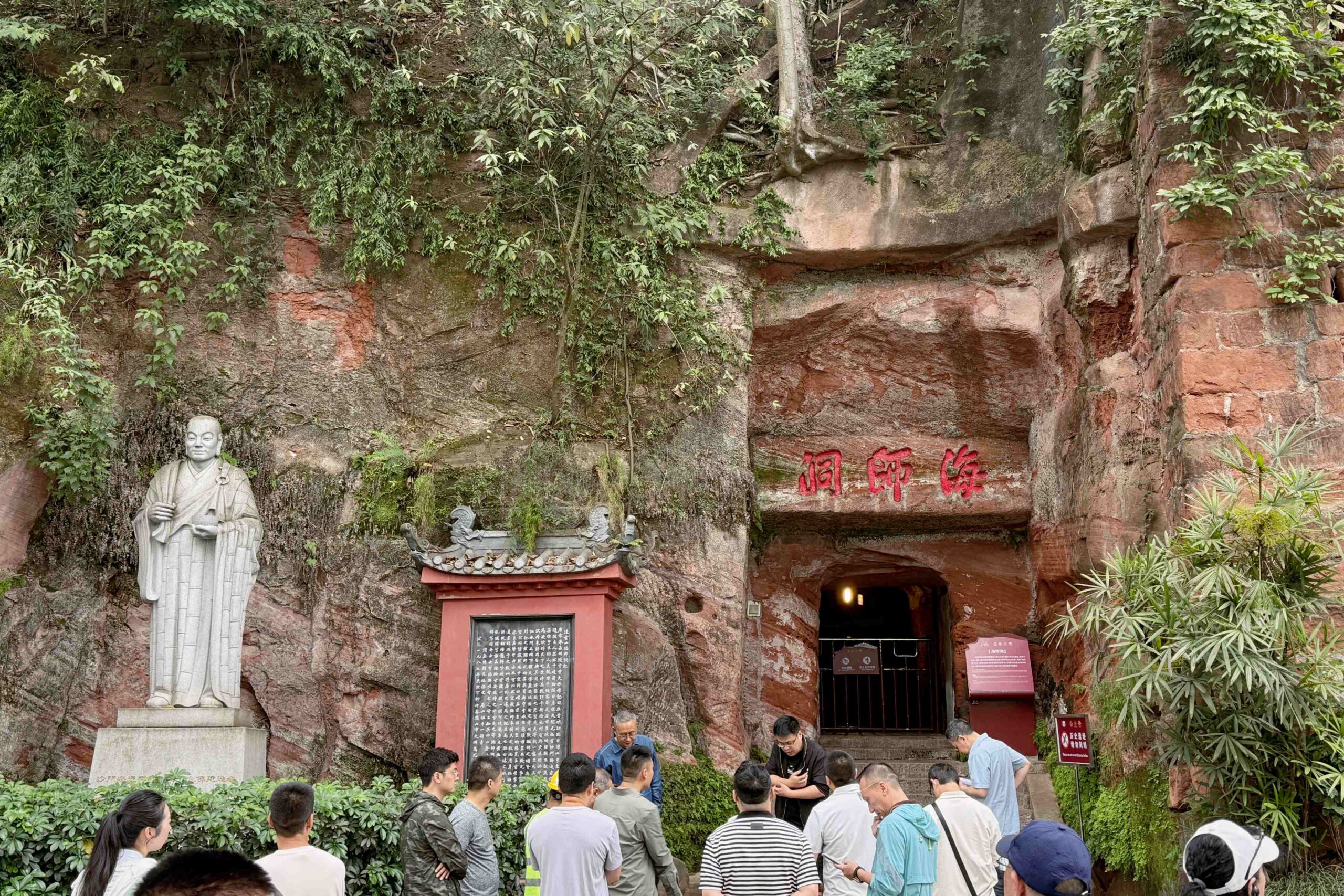
04|Haishi Cave
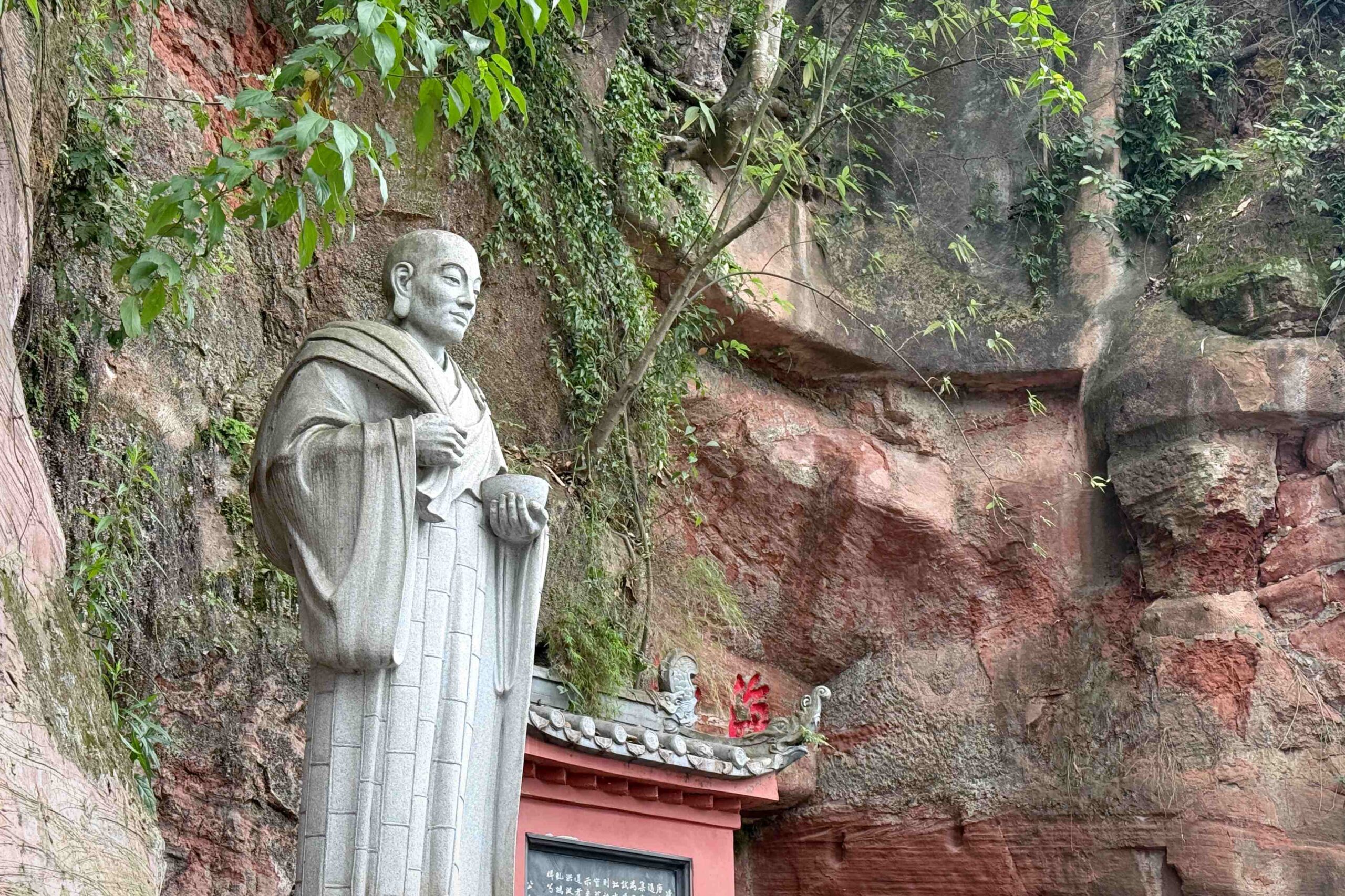
Haishi Cave was the place where the monk Haitong lived while overseeing the construction of the Leshan Giant Buddha. In front of the cave stands a statue of Haitong, gazing directly toward the Buddha. I imagine that, seeing the Giant Buddha still standing strong more than a thousand years later, he would feel deeply comforted and fulfilled.
05|Buddhist Blessings and Amulets
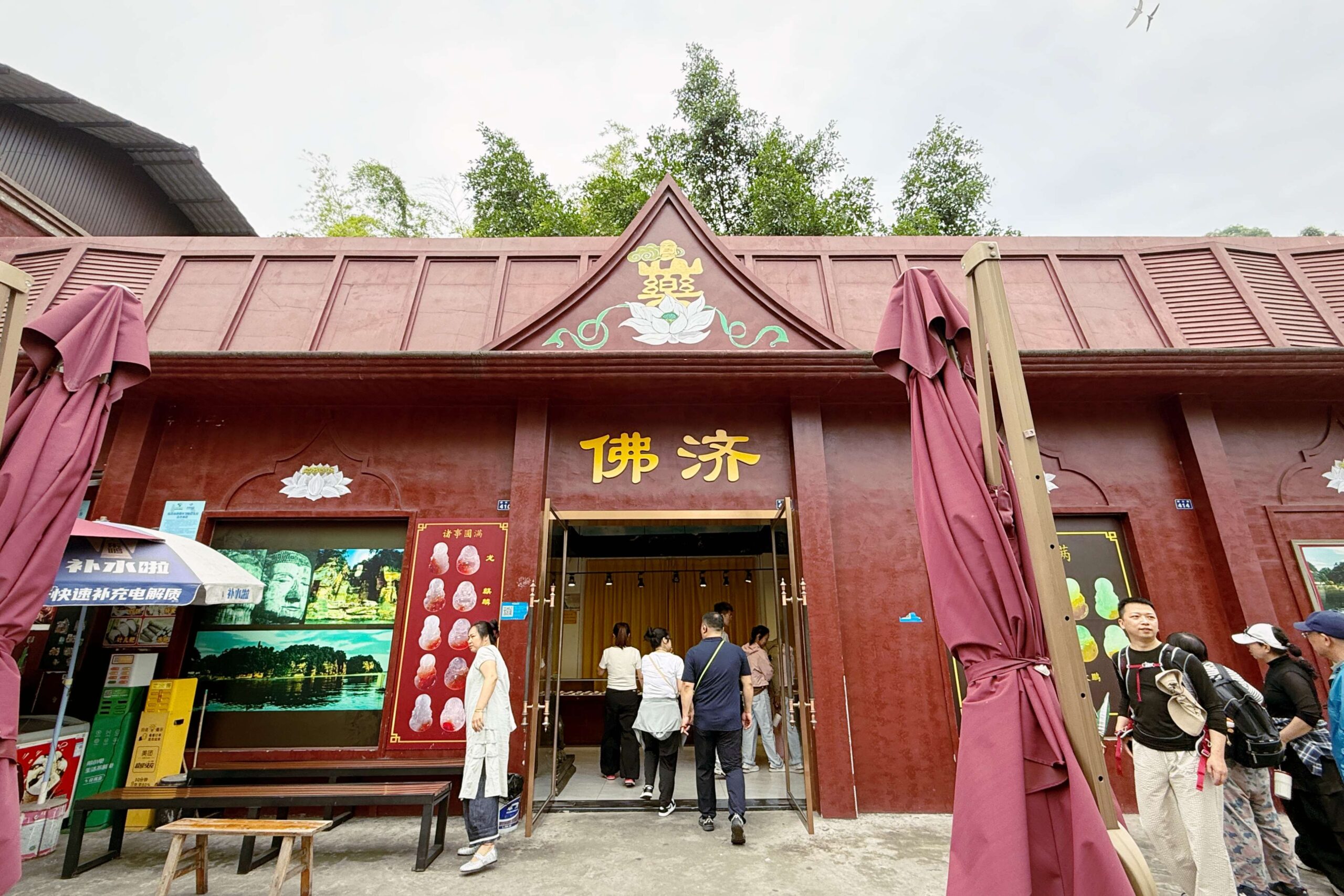
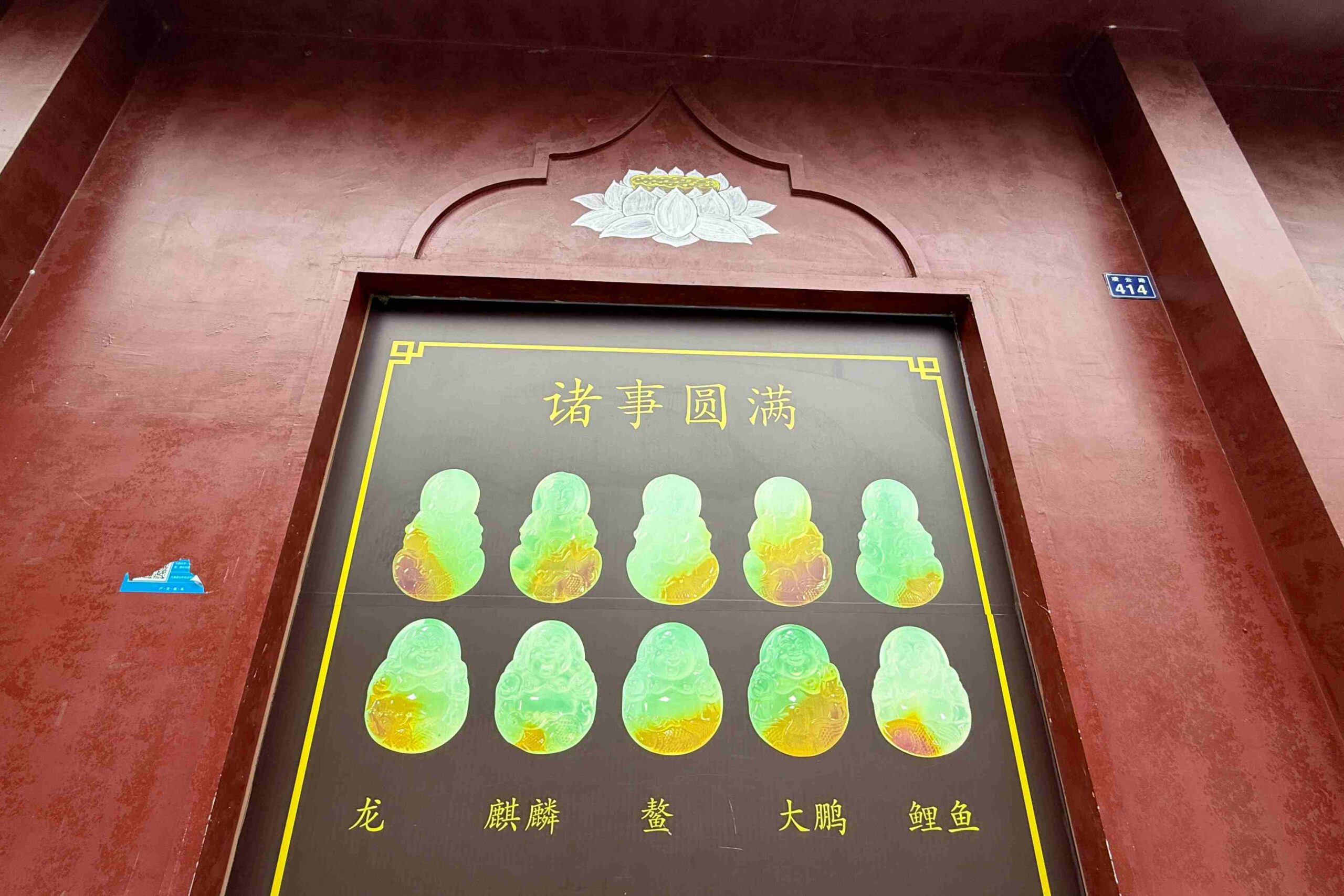
As the Leshan Giant Buddha is an important Buddhist sacred site, many worshippers wish to obtain a protective amulet after paying their respects. Tour guides often bring visitors to shops selling jade Buddha statues and religious ornaments. According to local belief, many of these statues have been specially blessed in Buddhist ceremonies.
◦ Taking a Boat Tour
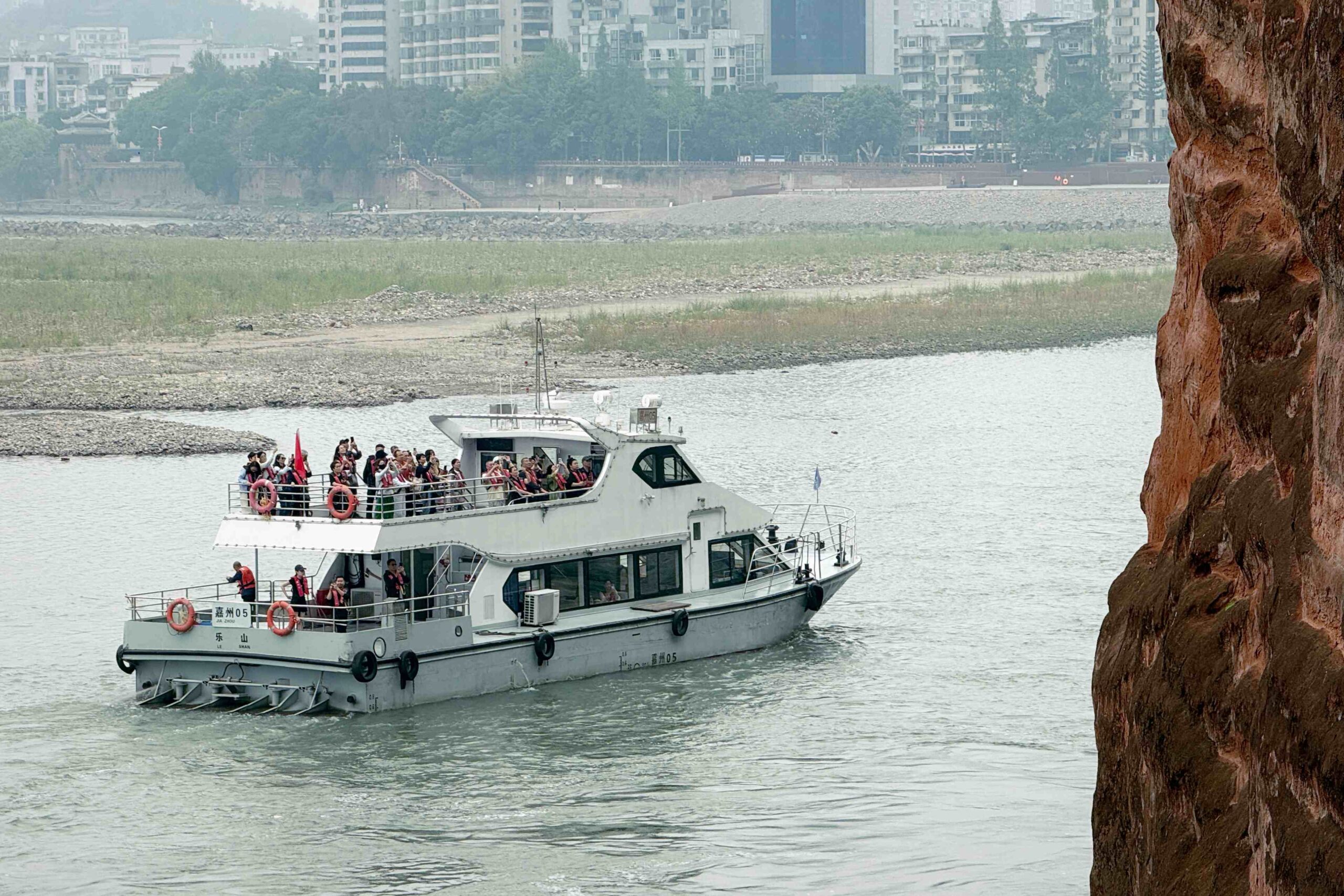
If you prefer not to hike up the mountain, you can also choose to take a boat tour. The cruise lasts about 40 minutes and offers a panoramic view of the Giant Buddha from the river. However, if you join a group tour, time is usually limited, so you often have to choose between the boat ride and hiking up the mountain. Personally, I would recommend the hiking route. Not only can you appreciate the intricate details of the Buddha up close, but descending to the Buddha’s feet is also a memorable experience. In addition, hiking allows you to spend more time visiting and praying at Lingyun Temple.
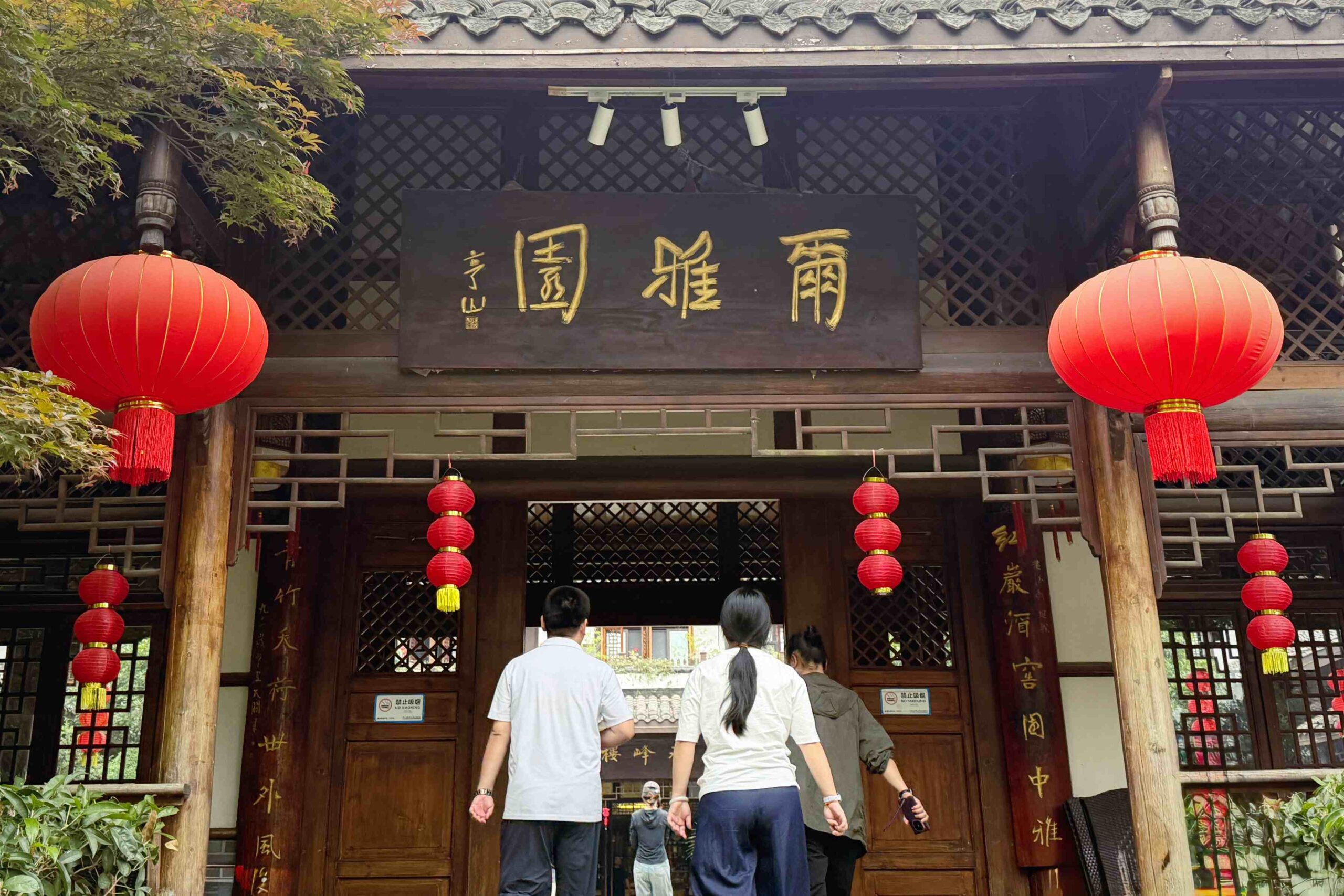
◦ Lunch: Eryayuan Restaurant
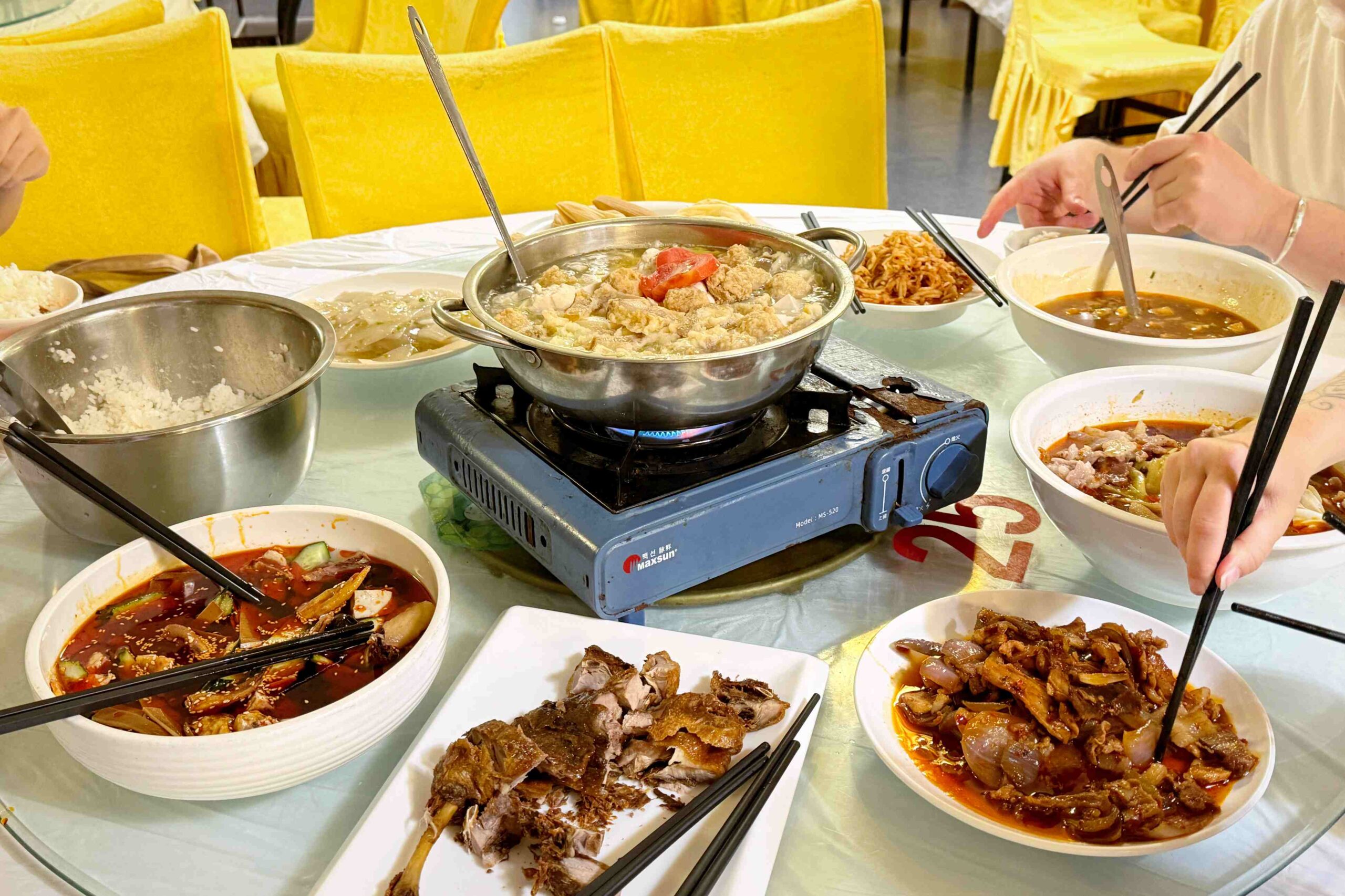
The one-day tour to the Leshan Giant Buddha and Huanglongxi Ancient Town lasts around 12 hours. Since we had to wake up very early in the morning, I was absolutely starving by lunchtime. Seeing a table completely filled with dishes instantly lifted my mood. The Sichuan cuisine here was prepared in a relatively mild and approachable style, with about half of the dishes being non-spicy. Because our tour group included travelers from Switzerland, Australia, and the Philippines, the milder dishes — especially the sweet-skinned duck and hotpot — were particularly popular with everyone at our table.
➤ Sichuan ◦ Chengdu|Huanglongxi Ancient Town
🙏 Leshan Giant Buddha & Huanglongxi Old Town Full-Day Tour
🙏 1-Day Tour of Mount Emei and Leshan Giant Buddha
1 留言
[…] ➤ 四川 ◦ 樂山|樂山大佛:護佑眾生超過千年的世界遺產 […]